BLYES: BioLuminescent Yeast Estrogen Assay

It looks like I will be doing some research for The Public Laboratory, trying to develop a yeast estrogen assay, specifically with yeast (BioLuminescent Yeast Estrogen Screen: BLYES).  Yay!  The overall goal of the project is to develop a kit that can be shipped to someone so they can, at some undetermined level of accuracy, determine the estrogenicity of their water.

Estrogenicity is an important metric that is best tested in vivo.  It   There are several factors that make it very difficult to asses otherwise.  The first problem is that there are a lot of chemicals, ranging from Bisphenol-A, which is found in many plastics, to birth control pills that all have estrogenic effects.  The other problem is that the only way to test how “estrogenic” something is to test it under the conditions that would be found in the body.  This is because of the unique estrogen receptors and chemicals like Sex Hormone Binding Globulin (SHBG) that inactivate (some) estrogens that are found in different biological systems.
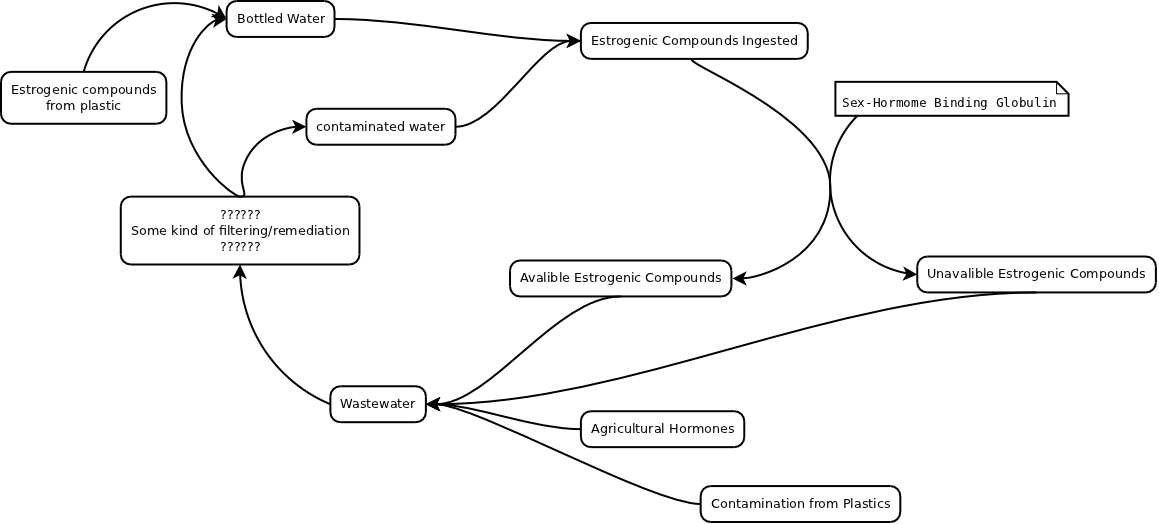
Flow of estrogenic compounds

Unfortunately, humans grow very slowly and there is a lot of legislation that makes it difficult to test on them, not to mention the ethical concerns.  Also, it is not one or two compounds, but thousands of chemicals (with new ones added frequently) that need to be tested.  The EPA is actually in charge of testing these things, and has two tiers.  The first tier tests if it has endocrine disrupting effects, meaning (for us) if it is estrogenic or not, and if it should move on to tier two testing.  The second tier tests how much of an effect it has at different levels.  You can read what the EPA has to say here.

BLYES seems like a good test, because tricky things like specific receptors, and blood levels of SHBG can be simulated.  BLYES is uses a genetically engineered strain of yeast.  It is S. cerevisiae, the same species as the yeast that people use to bake bread or brew beer.

YES assay system. Circles are rough sketches of the plasmid. Estrogen interacts with hER-α receptor coded by pSCW231-hER, which causes the translation and transcription of β-galactosidase, which produces a colormetric change in some substrates

BLYES is really the combination of two earlier systems, one for detecting estrogen, and one for making yeast express bacterial luciferin.  The original system was called the Yeast Estrogen Screen (YES).  It is based around two plasmids.  One contained hER-α, and is called pSCW231-hER.  I have not yet found out what pSCW231 is, but it seems that it causes hER-α to be expressed in the membrane.  The other plasmid is YRpE2, which seems to stand for “Yeast Reporter Plasmid ERE 2”, because it has two ERE elements and contains the CYC1-lacZ fusion gene.  This gene codes for β-galactosidase, which breaks down ONGP to into something yellow.  This system, when exposed to estrogen, causes the hER-α to turn on the ERE, producing β-galactosidase.  The actual assay is done after allowing the yeast to grow in the media.  The cells are exposed to ONPG, and the “yellowness” of the result is read with a spectrophotometer.

the Lux operon. LuxA and LuxB code for the luciferase enzyme, while LuxCDE code for the substrate and complex that recycle it

The other component of BLYES is bioluminescence, which comes from two plasmids.  The genes for bioluminescence were inserted into two pBEVY (plasmid for Bidirectional Expression Vectors in Yeast) plasmids.  These carry the genes luxAB on one plasmid, named pUTK407, and luxCDE and frp on another plasmid called pUTK404.  luxAB codes for the luciferase that reacts with the FMNH(2) to produce light, while the luxCDE reduces the FMNH(2) so that it can be recycled to create more light.  frp codes for the FMNH(2).  The luxCDE plasmid is constitutively on because of its promoters, (GPD and ADH1).  In pUTK404, the genes frp, and Lux genes C, D, and E have Internal Ribosome Entry Sites (IRES).  These IRES ensure that the genes are properly transcribed by the ribosomes, instead of the ribosomes creating fusion protiens of LuxCD and LuxE-FRP.

BLYES: hER-α receptor is encoded by chromosomal DNA. Activation of the receptor turns on production of luxA and luxB under the control of bidirectional EREs. This enzyme reacts with the FRP produced by the constitutively on pUTK404 plasmid. pUTK404 also encodes LuxCDE, which allows the recycling of FRP. frp, and Lux genes CDE have IRES (internal ribosome entry sites) in-between them to ensure proper transcription

The difference is that BLYES has the human Estrogen Receptor alpha (hER-α) integrated into its chromosomal DNA.  This means that it is inside the nucleus.  Additionally, it is under a constitutive promoter.  The when it binds to an estrogenic chemical, hER-α turns on a signaling pathway that activates the Estrogen Response Element (ERE) promoter.  This promoter is on a plasmid that turns on light production with lux genes (bacterial luciferin/luciferase), and this is measured by a very sensitive detector.

Since The Public Laboratory wants to make this into a kit that they can send out to people, BLYES or YES may not be a good option, because they take very sensitive tools and extra chemicals to test estrogenicity.  Towards making this kit a possibility, we may try to link ERE activation to pigment production.
Lockpicking Saves the Day (or foozeball table)

My first lockpick, which I did not use for this.

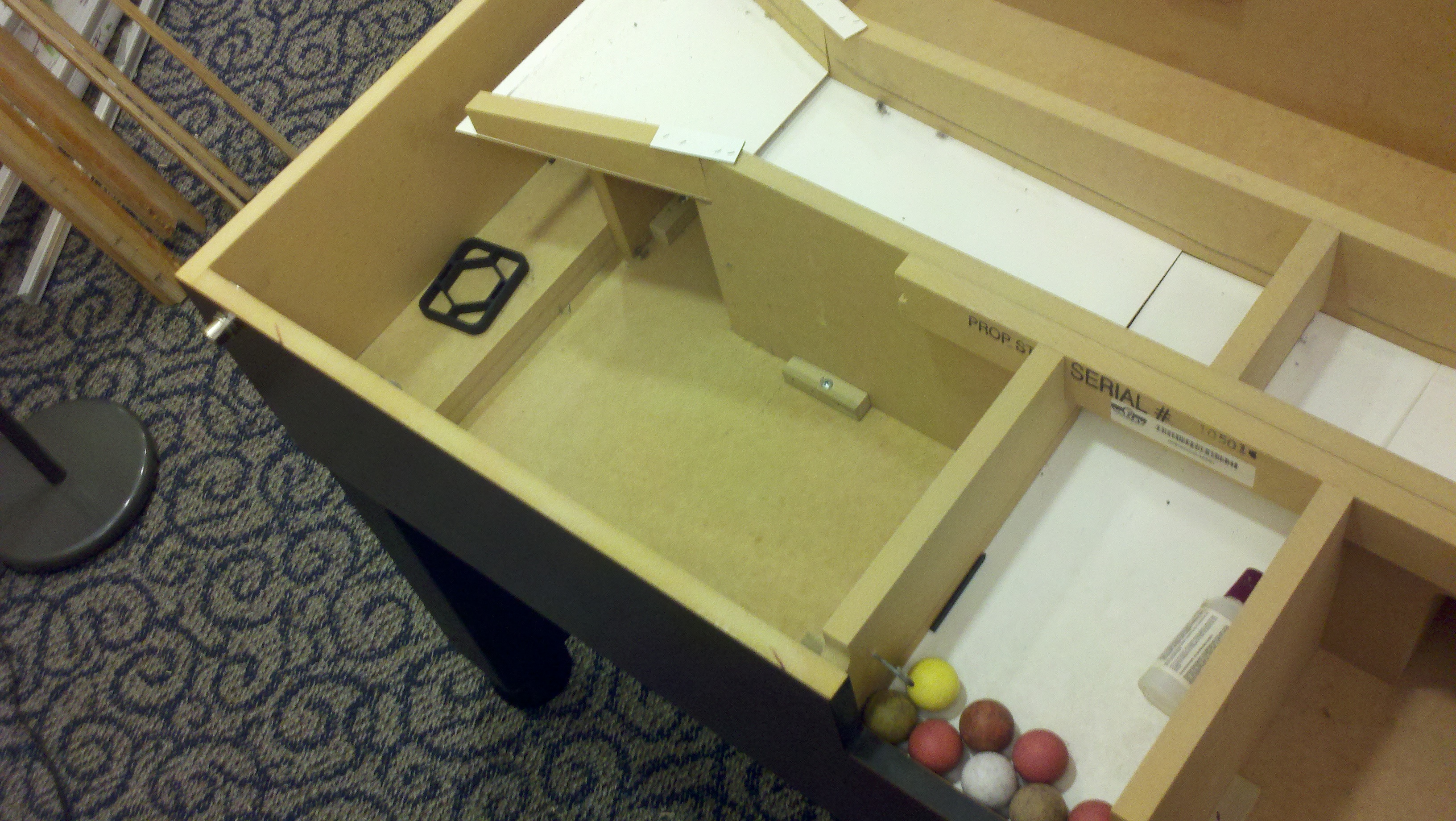
Last Friday, a terrible thing happened in the first floor lounge of West Hall at Olin College.  The foozeball table, known and loved by many, was flipped.  While most furniture is unharmed by this kind of tomfoolery, the foozeball table (as I now know) has a bunch of wooden chutes inside that direct balls from the goals to the ball return.  One of these had been dislodged, and people could no longer get the balls out!  On no!

The chutes in question

Fortunately, this was actually part of the design of the table.  The explanation we came up with was that at commercial foozeball-halls, the ball return is disabled so that the owners can sell balls.  The whole table acts like a giant hinged box to hold the balls, until the owner comes by with the key and retrieves them.

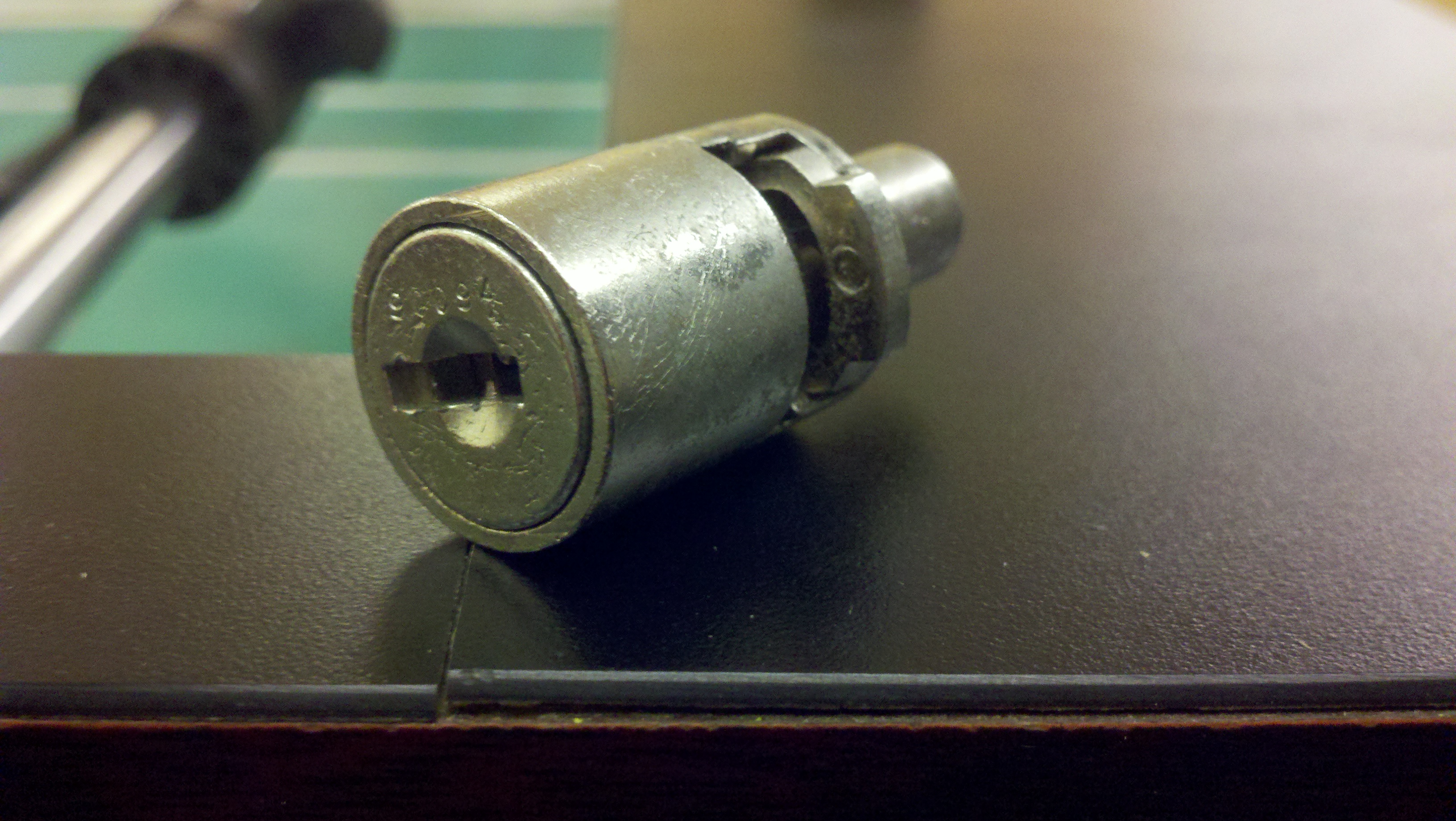
Picked!

Using my friends hook and tension wrench, I had both wafer tumblers picked in a jiffy.  The ramp was re-lodged, tested, and the balls were retrieved.  While the ethics of lockpicking on locks in use is somewhat grey, I feel like it was justified.  Normally the rules for picking are are:

“Do not pick locks you do not own or have explicit permission to pick.  Never pick a lock that are in use”

But this time it was a lock that the students owned (and I was being asked to pick), and by being in use it was obstructing the use of the table.  I also had sufficient skill and knowledge of the working of the lock to pick it without damaging it.

Yay using lockpicking for good!

TOOOL Boston Meeting: Pick Locks; Get Loot

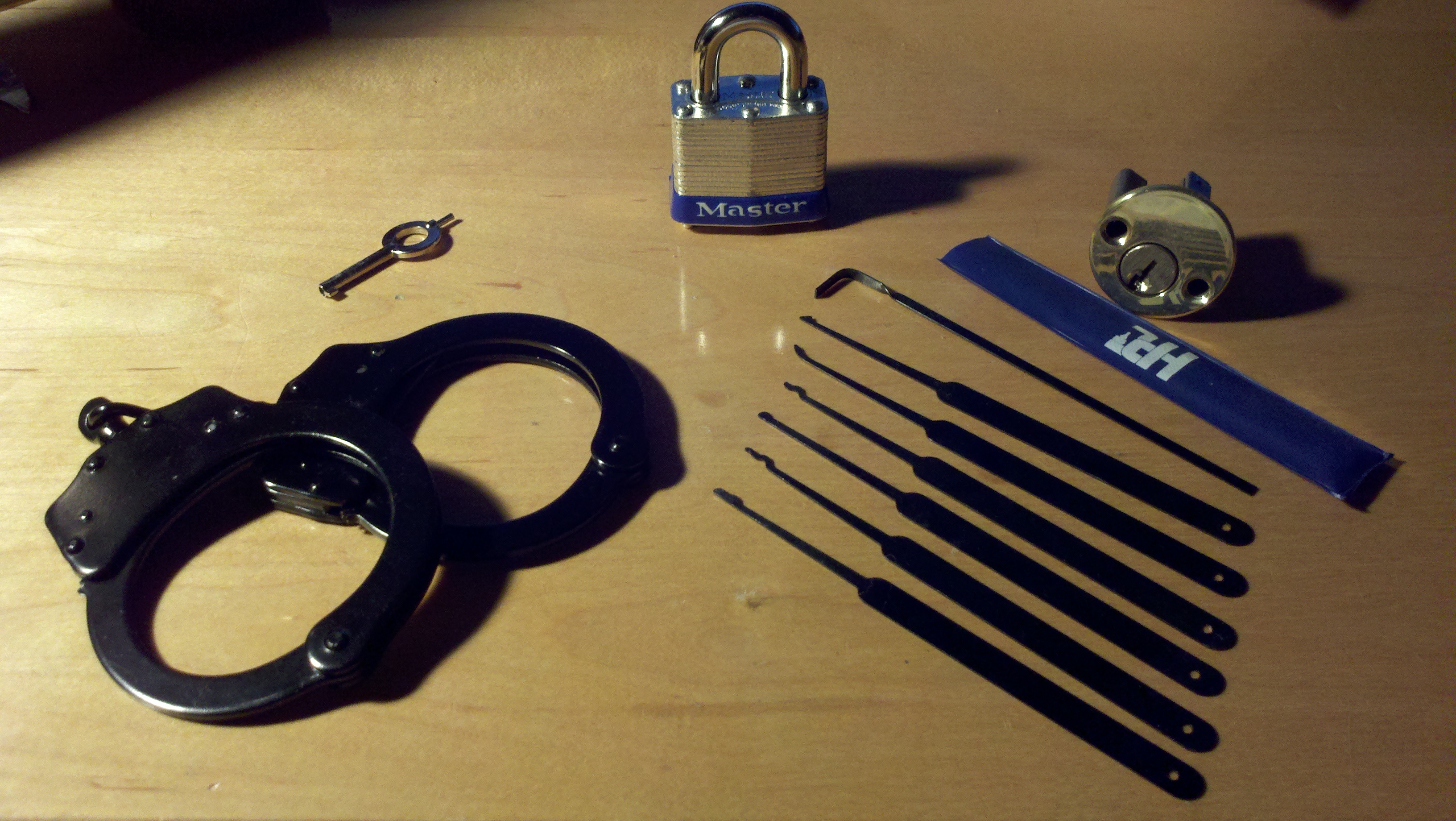
Swag from TOOOL Boston meeting

This past weekend I decided to go to a meeting hosted by The Open Organization Of Lockpickers, or TOOOL.  I have been involved in lockpicking and collecting locks since I was about 10.  My initial fascination was with the master locks that secured everyones lockers; the first lock I tried to pick was on the back of my school combination lock.  All the locks at school had two modes of entry; one combination entry method for students, and a small pin-tumbler lock in the back so janitors/administration can get in.  Of course everyones lock is compromised if someone tears down their lock and gets at those key cuts, and then makes their own key, so try not to use these if you can avoid it.

Anyways, this meeting was relaxed, with picks and locks on the table while squelchtone gave a presentation on many many kinds of locks and various methods for picking them.  While informative, I had heard most of it before.  However when the crowd was polled for volunteers for a little bit of competitive picking, I jumped on the opportunity.  As I was handcuffed, I felt a competitive rush that I hadn’t felt since my last swim meet.  In a few minutes I had picked my master padlock and quikset deadbolt, and shimmed my way out of the handcuffs I was in, rendering me the winner.  As the two other folks struggled out of their bindings, I learned that I would be receiving a set of HPC picks, a handcuff key, and all the locks I had just picked.  Yay!  Second and third place got some practice locks and lockpicking CDs to help beef up their skills.

After that I got to see some awesome stuff, ranging from custom picks by ratyoke, ray, and ln21, to a really rare prototype lock (one of two!) that was produced for the US military.

This was definitely fun, and I will hopefully be able to attend more TOOOL meetings.  If you are wondering if TOOOL boston is active, it is, and you should definitely go.

REVOBots: Getting Ready!

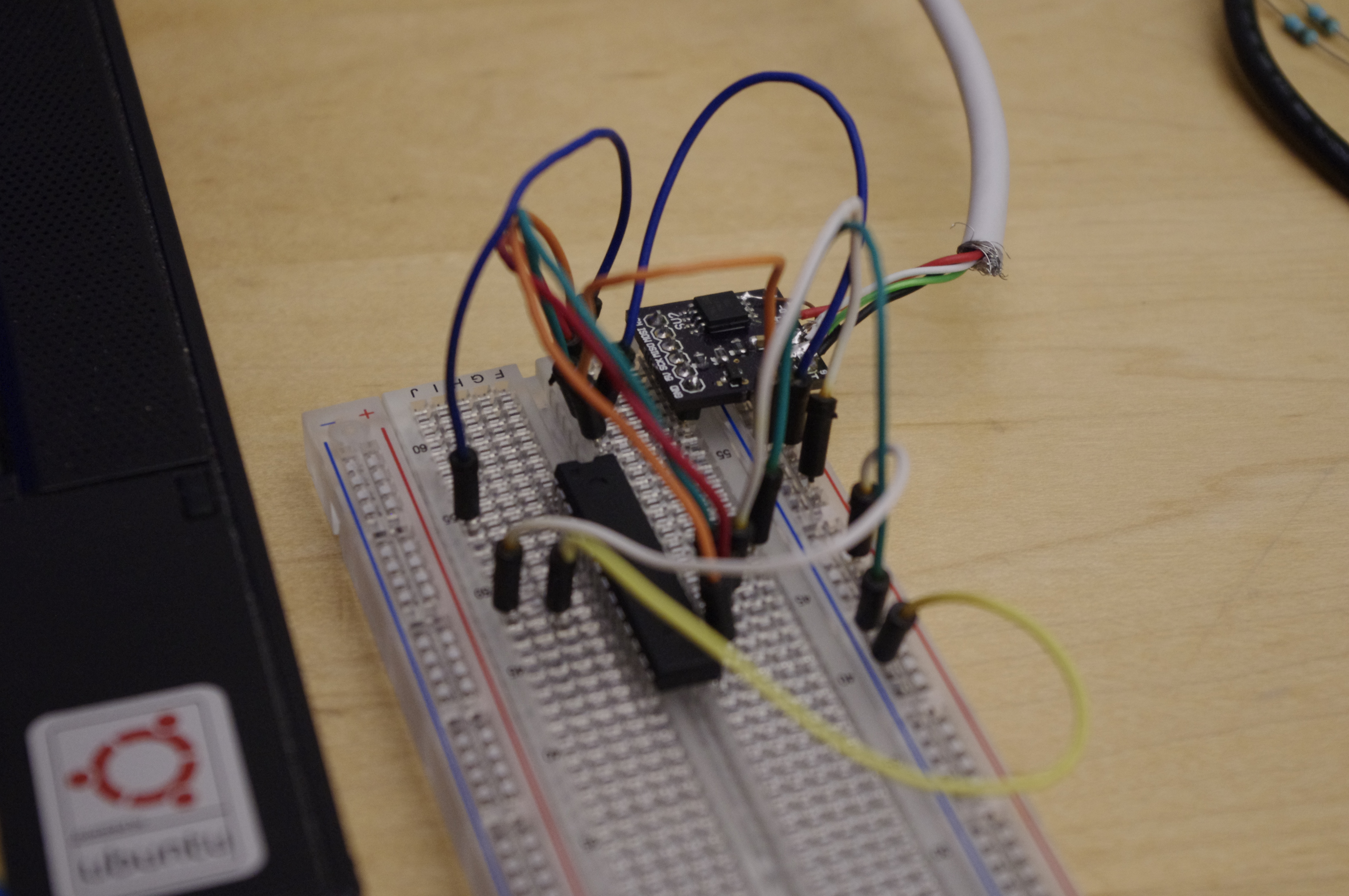
Custom SMD Attiny45 USBISP programmer doing its job!

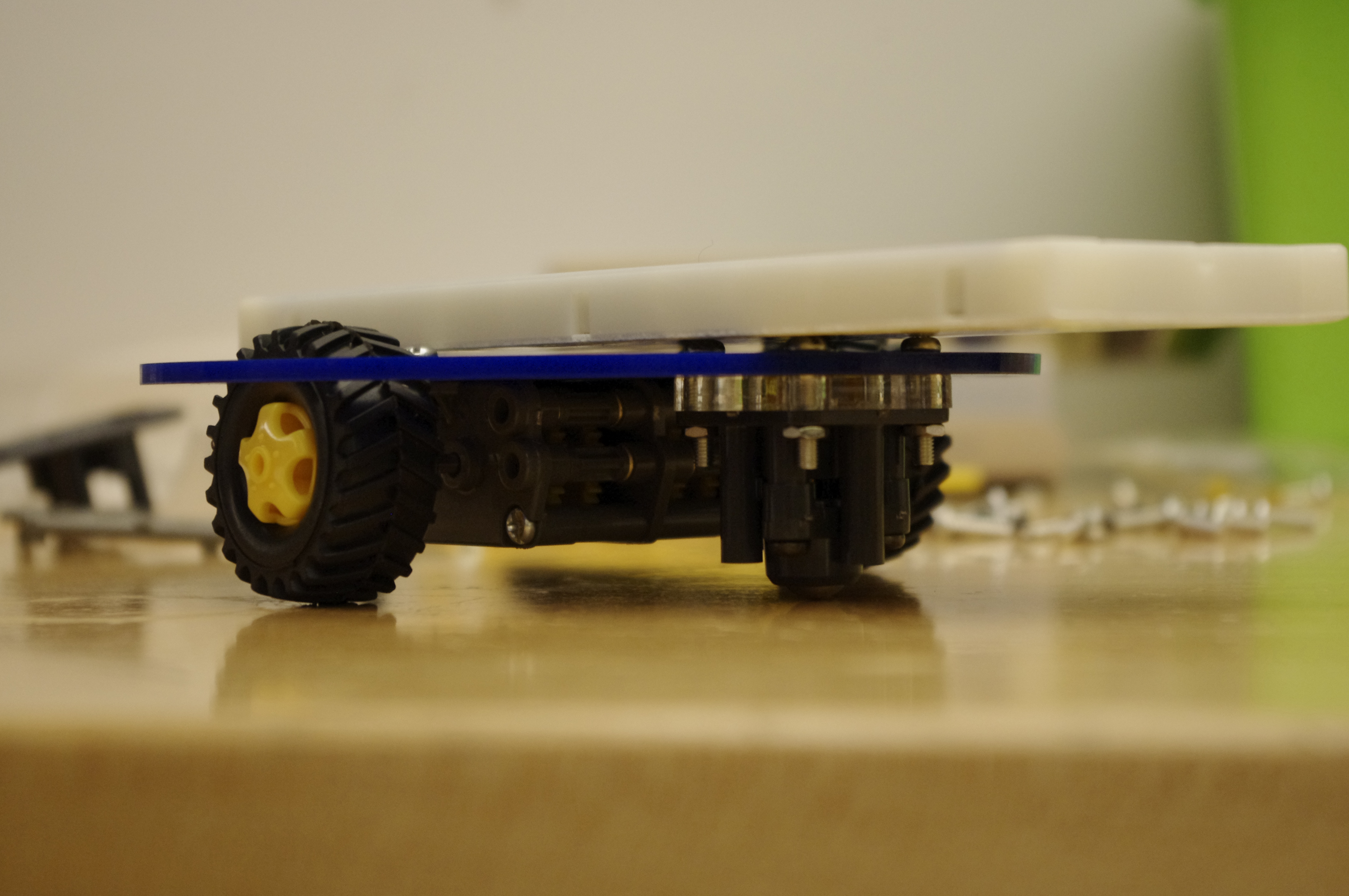
Last night a small package from monoprice, and a huge box from pololu arrived.  In it were the materials for the REVOBots class I am going to teach.  Since the first class is this weekend, I really needed to finish the guide/handout!  I spent all night building a Tamaiya gearbox (pictorial instructions soon!), re-building a $5 arduino, and eventually fixing an attiny45 based usbisp programmer.  The git repo for the bootloader of the $5 arduino is here.  It took about 6 hours to finally get everything working.  There were several stumbling blocks, like the gearbox having 3-4 configurations, and a dead ATMega chip.  But when I finally got the arduino IDE to talk to the chip, it was worth it- it was much easier to sleep knowing that the parts coming in from digikey would work.  Anyways, the first REVOBots guide is posted now, in the downloads section, or with this link.  REVOBots are coming!

REVOBot 001

Transformation 3.0: Today I learned about Ampicillin

Today I learned that you should immediately plate bacteria that have ampicillin, and that it is SOP to do so in our lab here at Olin.  It doesn’t matter that you add them immediately, because they have time to inactivate the amp before they divide, which is when the amp kills them.  Maybe this explains all the satellite colonies I saw before!  I was waiting a good 15-30 minutes, which allows the bacteria to express beta-lactamase, which breaks down ampicillin.  This can destroy nearby ampicillin on the surface of plates, destroying any antibiotic effect, creating satellite colonies.  Oops.  Time to revisit my transformation protocol.

Adventure: Dawn Mine at Dusk

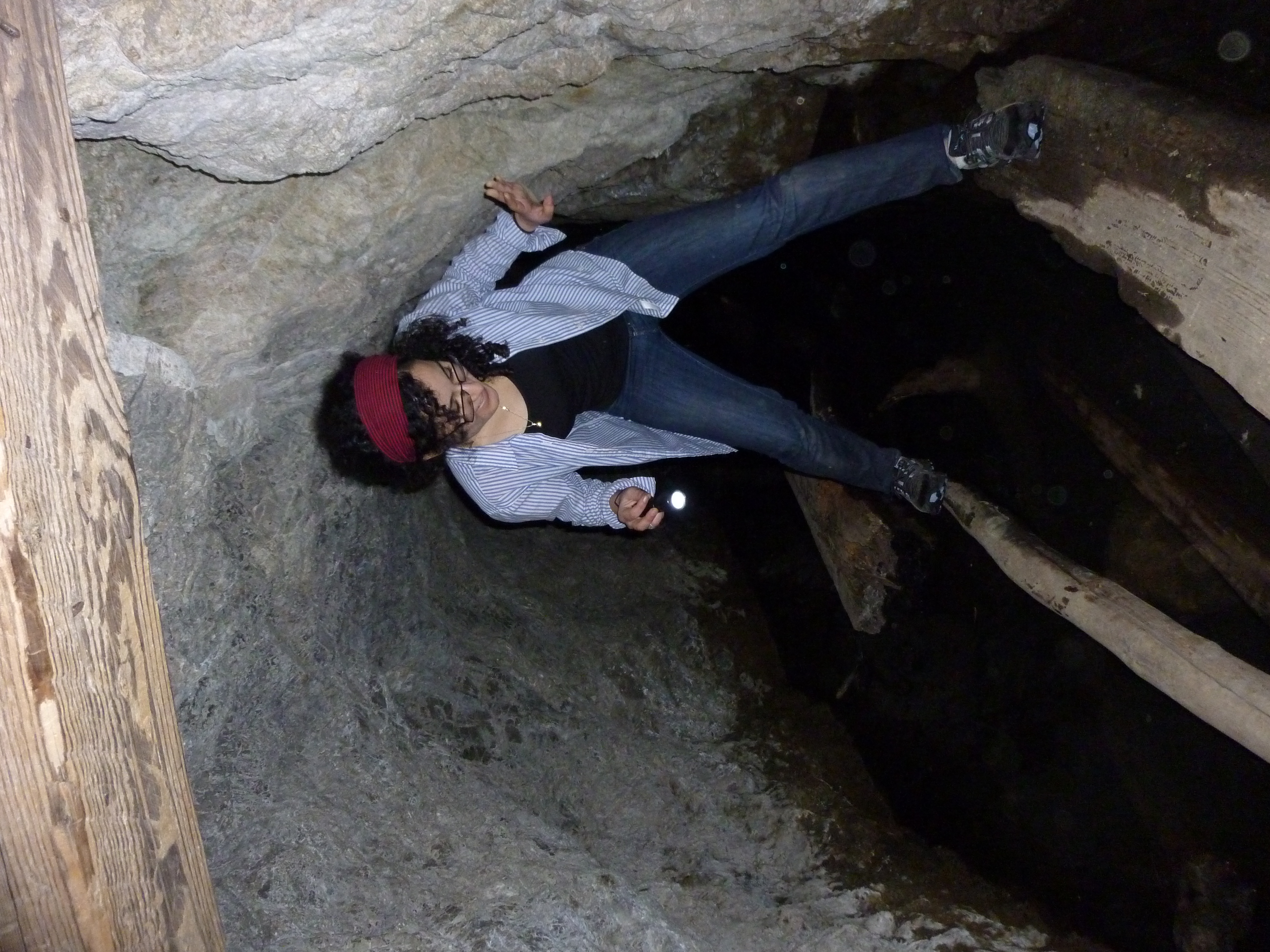
You can’t tell, but there is an underground waterfall behind us.

After the Kelsey mine trek, I expected my adventure to Dawn mine to be a light hike, followed by the exploration of a small mine.  It is in the well hiked Millard Canyon, just outside of the suburbs surrounding LA to the north.  It is not even a long hike- the trip report I found here pegs it at a 5 miles round trip.  This was supposed to be a trip to test the mettle of a new potential adventurer, Chloe, for a canceled adventure to the Allison mine.

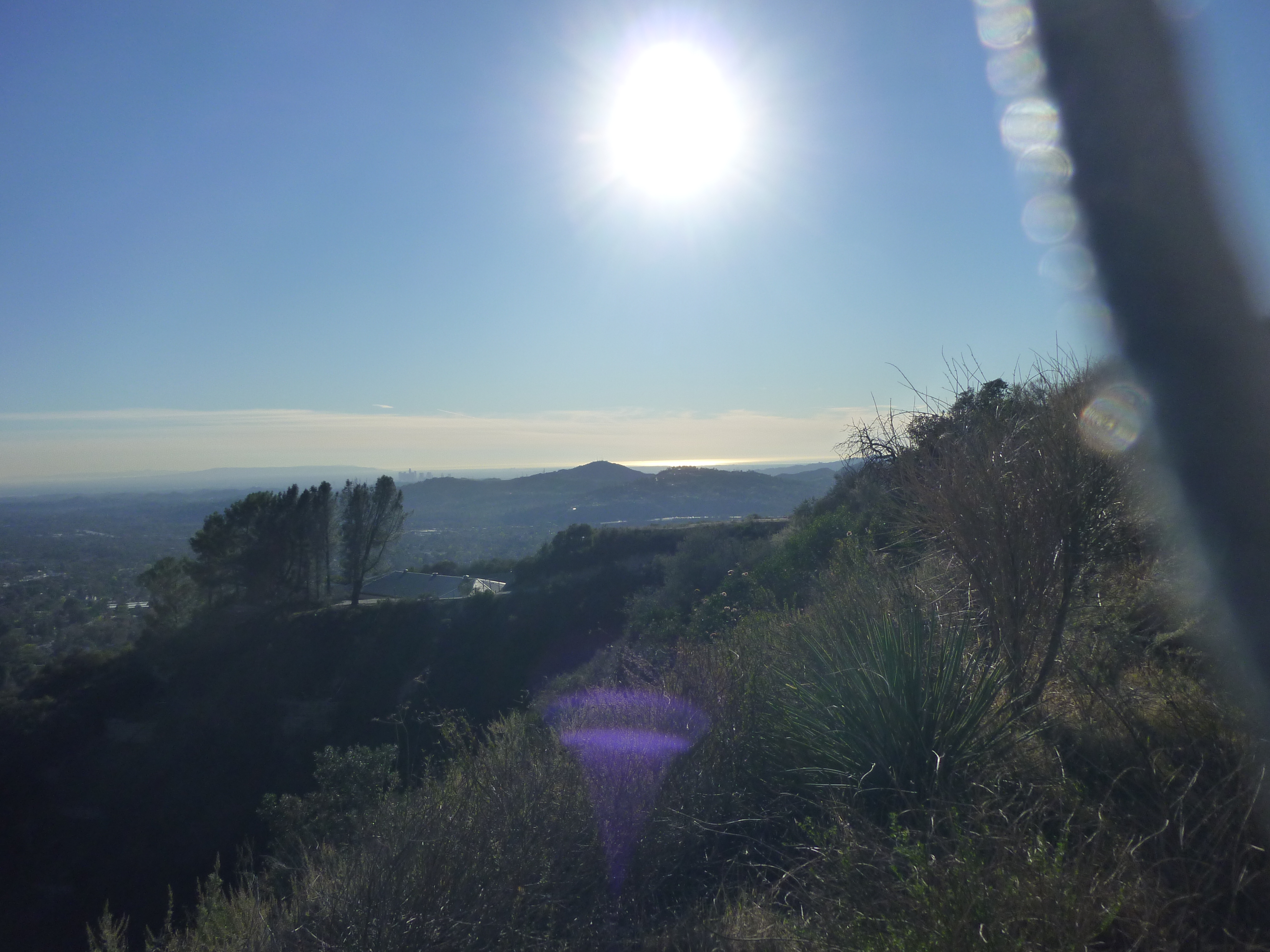
View of LA from Millard cyn Trail

The team this time was Chloe, the ever-reliable Hardee, and myself.  We began the adventure by purchasing an ANF adventure parking pass at Turners, and heading up lake street to Millard Canyon.  Upon arrival, at about 3:00 PM, the car had some trouble turning off its engine, but once that was sorted we started our hike by heading out on the East road from the first parking lot.  This led us along the crest of a hill that offered superb views of LA and the surrounding cities.  We followed this path and it wrapped around a hill to our right and descended into the valley floor.  Once we hit the rangers cabin, we descended into the river bed and the adventure began in earnest.  We were careful to take note of and remember warning sign that was posted on a large tree in the river bed near the cabin; this would be a waypoint for us on the way back, in case we did not see the cabin.

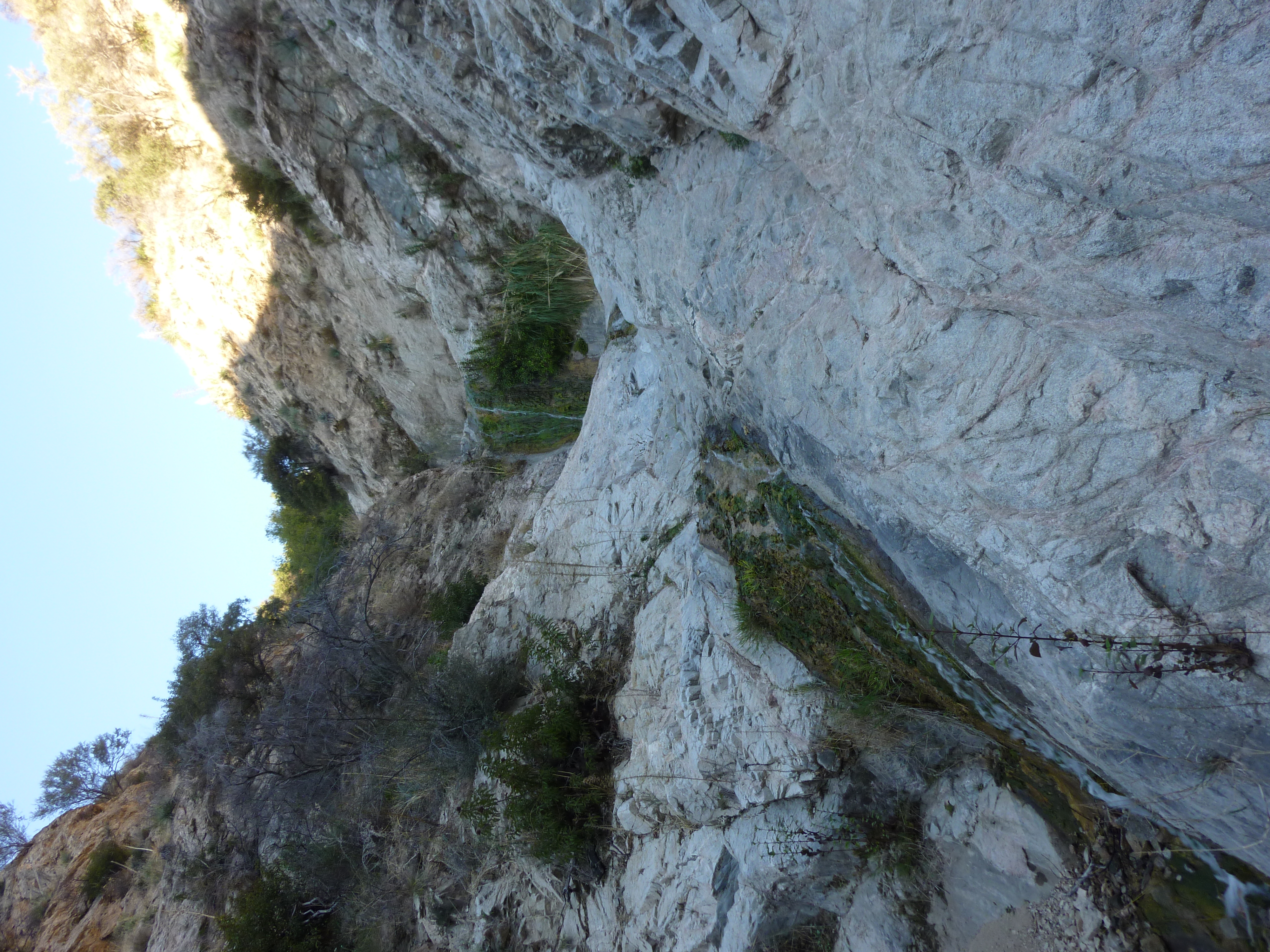
The Falls!

We continued up the rocky riverbed until we hit a fork.  A high path that looked like a river bank led off to the left, while the other plunged back down into the bed and continued up a rocky tributary.  We decided to go left here and visit Saucer Canyon Falls, which were nice.  We saw some people who had climbed up pretty high. We will definitely be back to climb up them someday!

Captain Crazypants leads the way

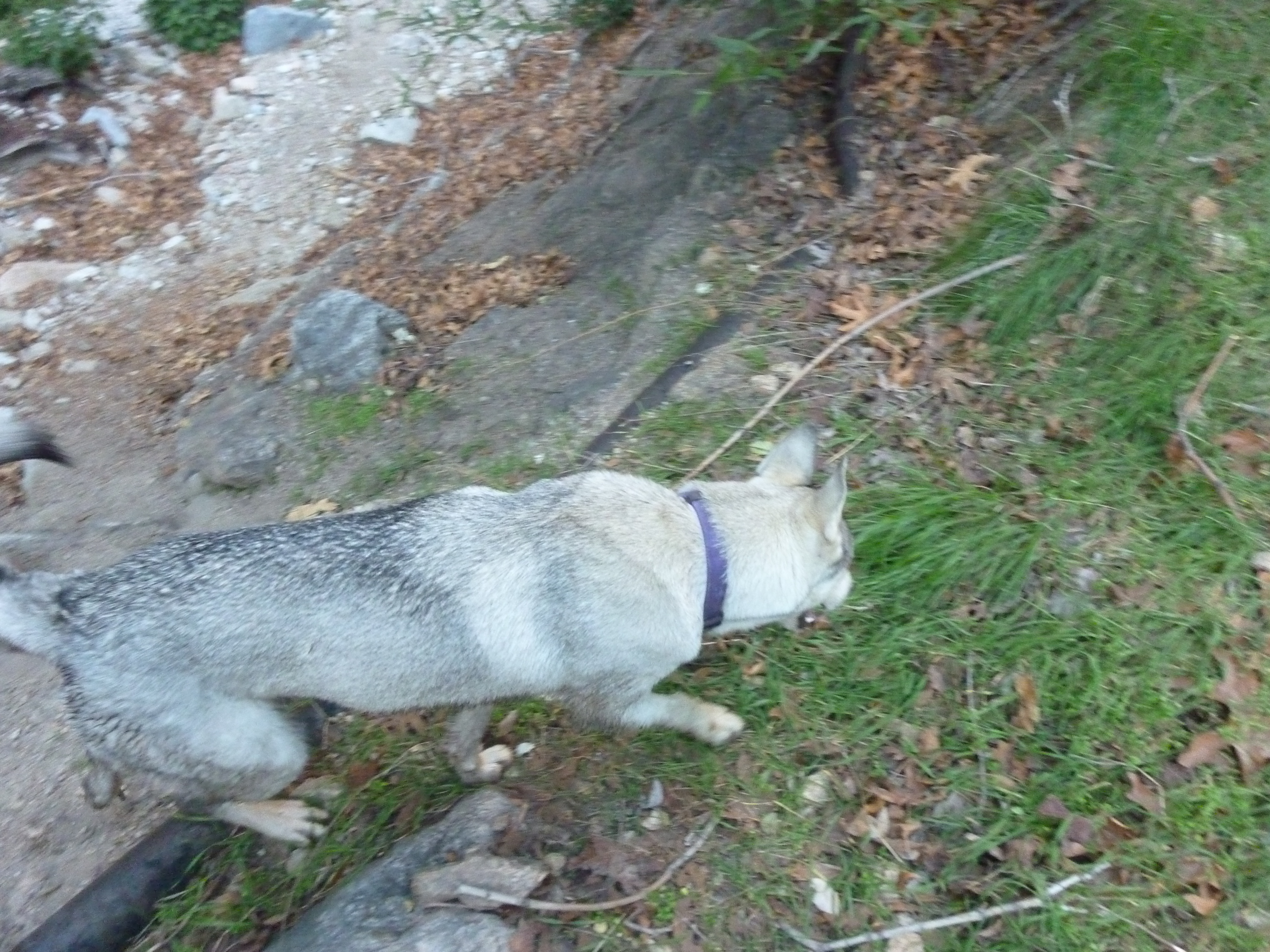
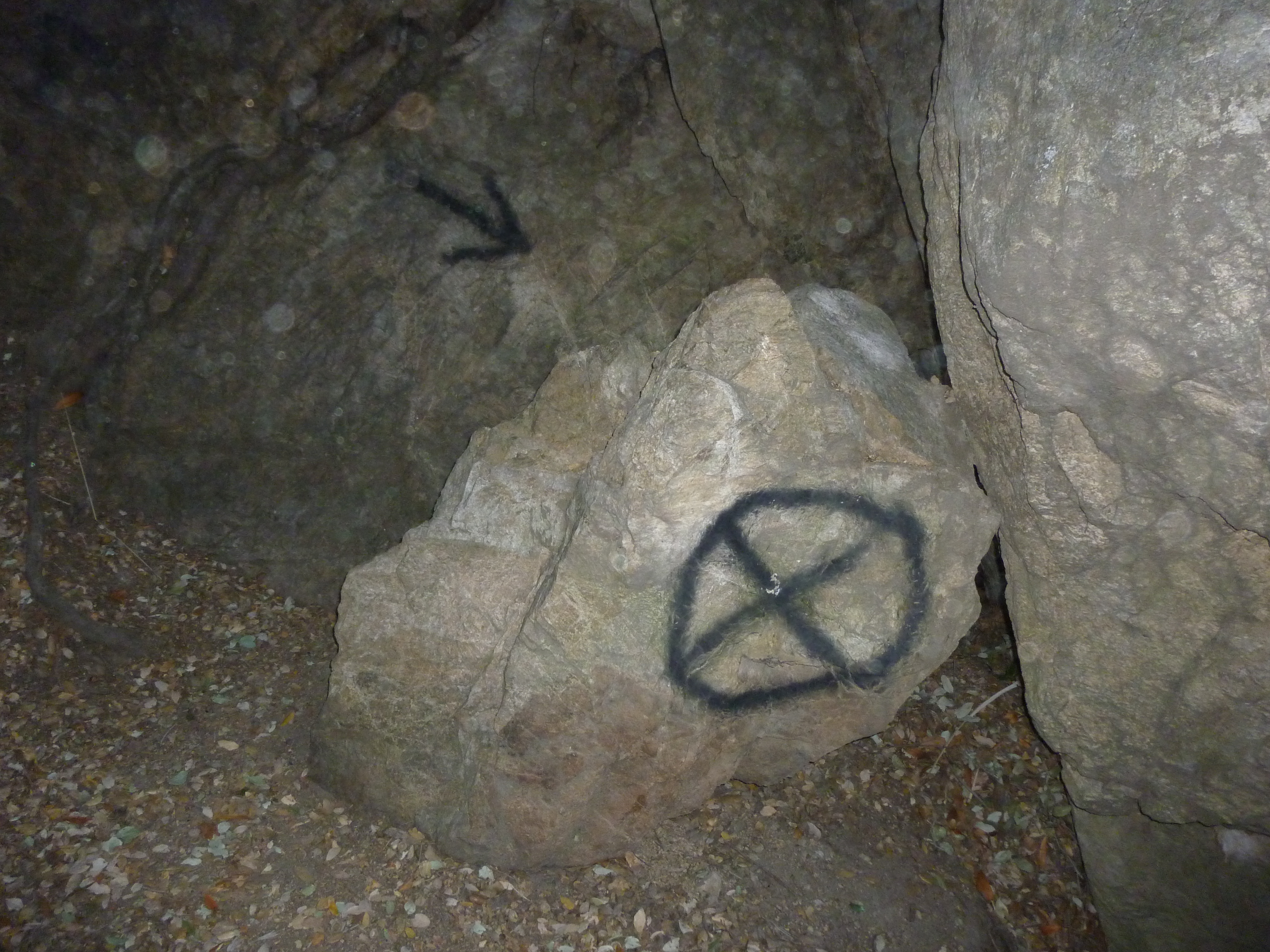
Before we returned to the main path, we met a dog (we assumed it belonged to the folks who were up on the falls), who we nicknamed capt. Crazypants.  Hardee had some jerky on him, and the dog would not leave him alone!  As we left, the captain followed us.  At first, we hoped he would go back to his owners, but it quickly became clear that he was leading us to the mine, and not the other way around.  There were also a lot of spray-painted arrows that went in the direction of the mine.

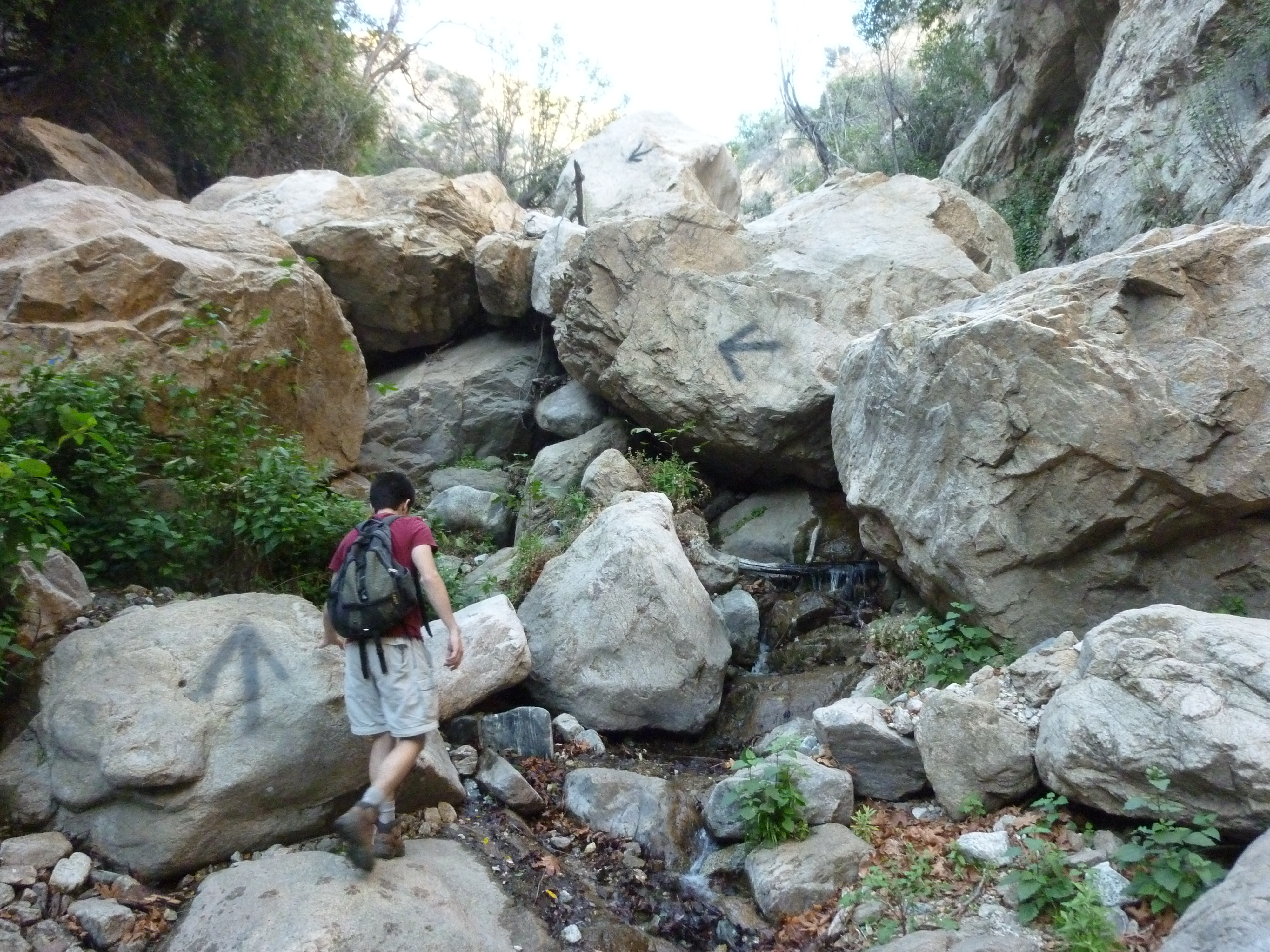
Hardee gets ready to traverse some rocks. Note arrows

We continued up the rocky streamed, doing our best to follow the instructions on Dans hiking pages.  We were looking, in particular for the point where “If you miss the trail you’ll find yourself climbing over and through the granite maze until the massive rocks forbid you to climb any further”.  Fortunately, we never found it and continued up the trail mostly through the riverbed, trying to skirt around spots of still or flowing water, and trying to stick to the more easily traversable river banks.

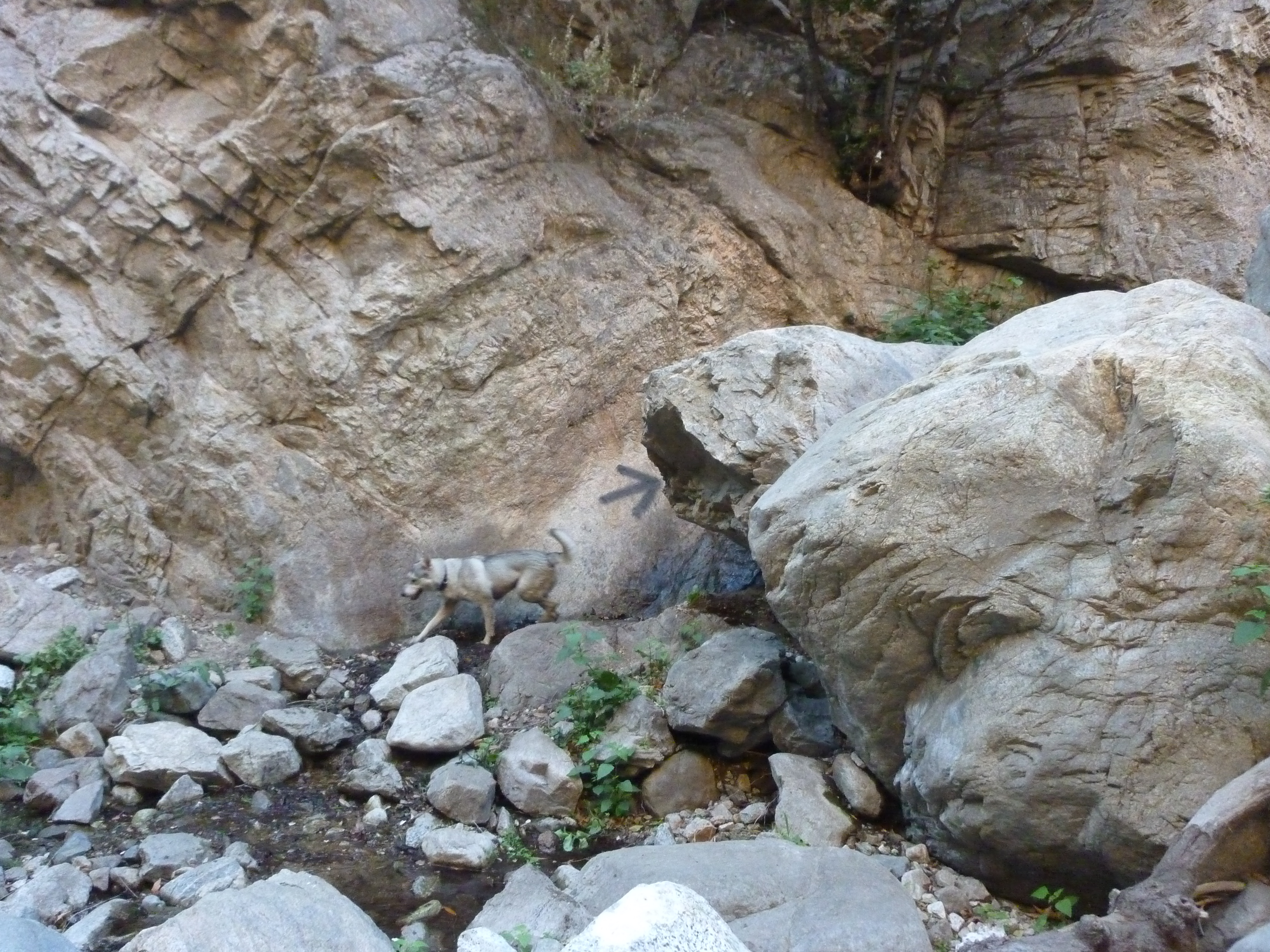
The captain going the wrong way.

By the time we got past these rocks, we were pretty tired, and the sun was starting to set.  We increased our pace, but our minds were wearied by the unknown length of the road ahead.  Captain Crazypants helped keep our spirits aloft, and kept leading the way.  The sun started to set as we entered a forested portion of the streambed.

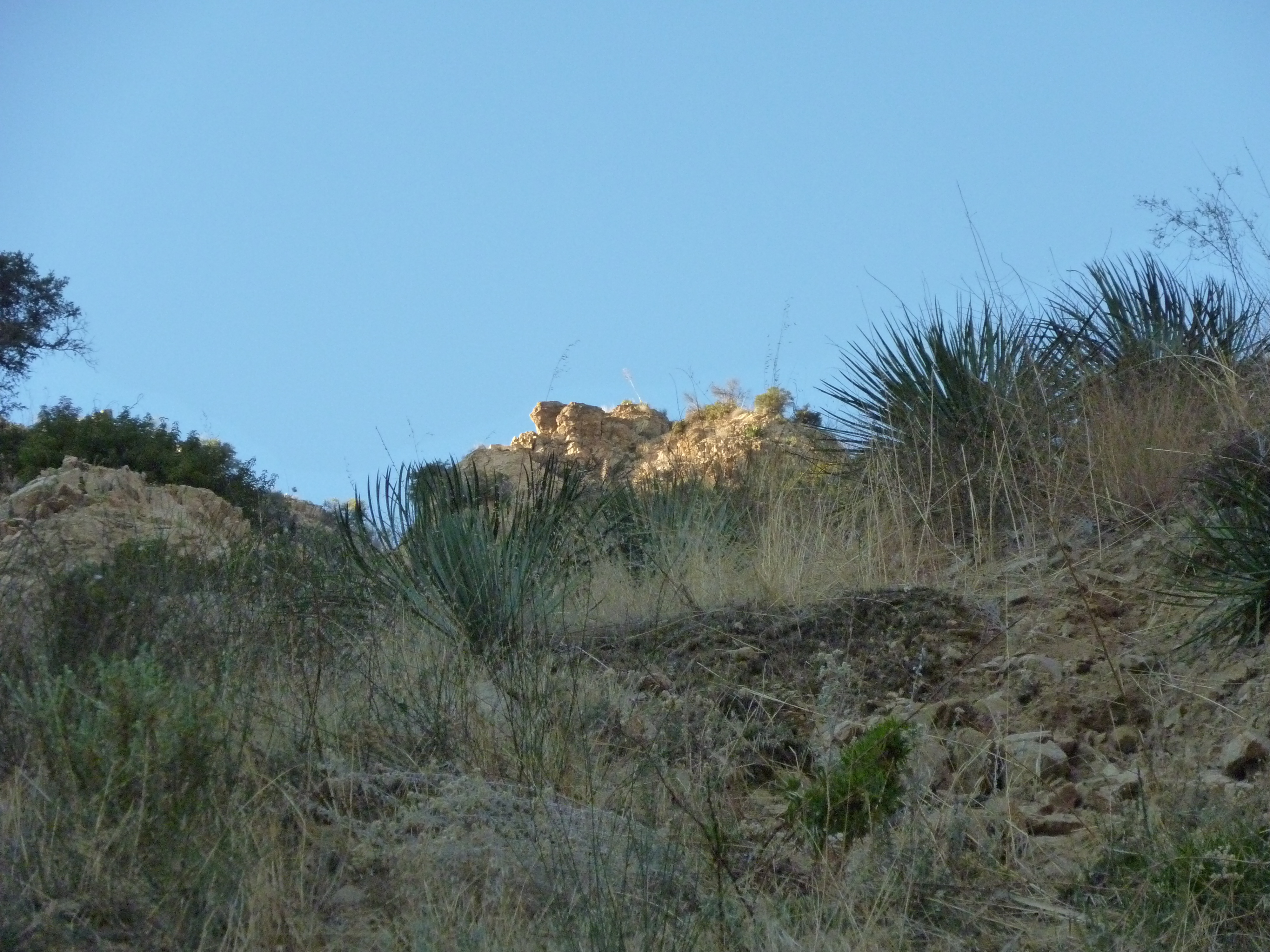
The suns last rays illuminate a faraway peak

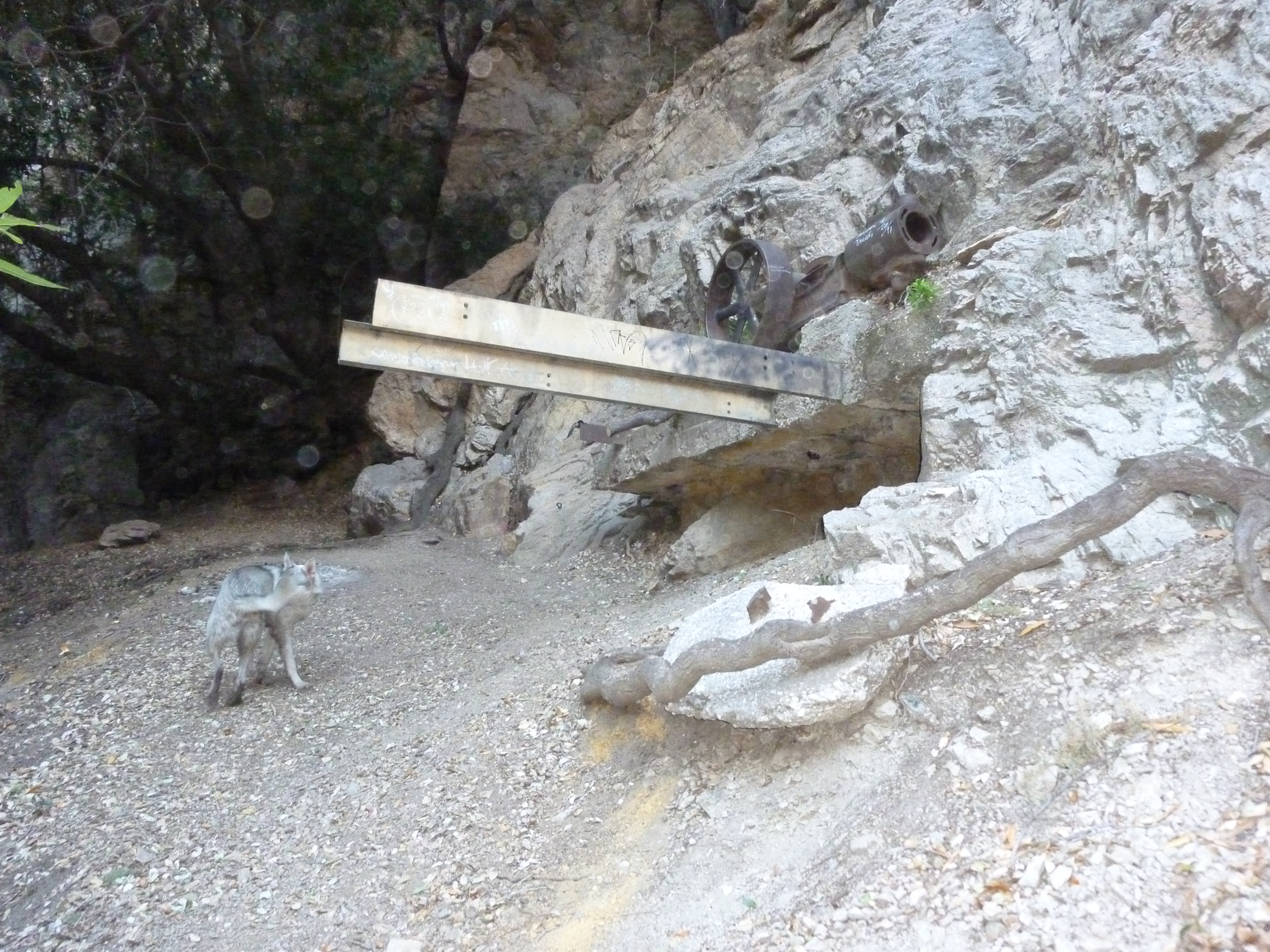
We were concerned about the sun going down, but we pressed on and eventually found the lower entrance to the mine.  There were many false-positives along the way, but the remains of some kind of steam engine give away the path to the entrance.

Large beams and steam engine on the way to the entrance.  Crazypants is still doggedly leading the way.

More spraypaint indicates exactly where the entrance is, hidden behind a boulder

Once at the entrance, we did a quick check of our lighting equipment.  I personally regret that we only had one light/person.  It just goes to show you that you always need to be over-prepared, even for hikes that seem like they should be easy.  The entrance was flooded, so Hardee and I switched to fivefingers and flip-flops (respectively) and Chloe decided to brave it in her shoes.  As we scouted out the entrance, Crazypants balked at the idea of even getting close to the entrance, and ran off, never to be seen (by us) again.  We miss you Crazypants.

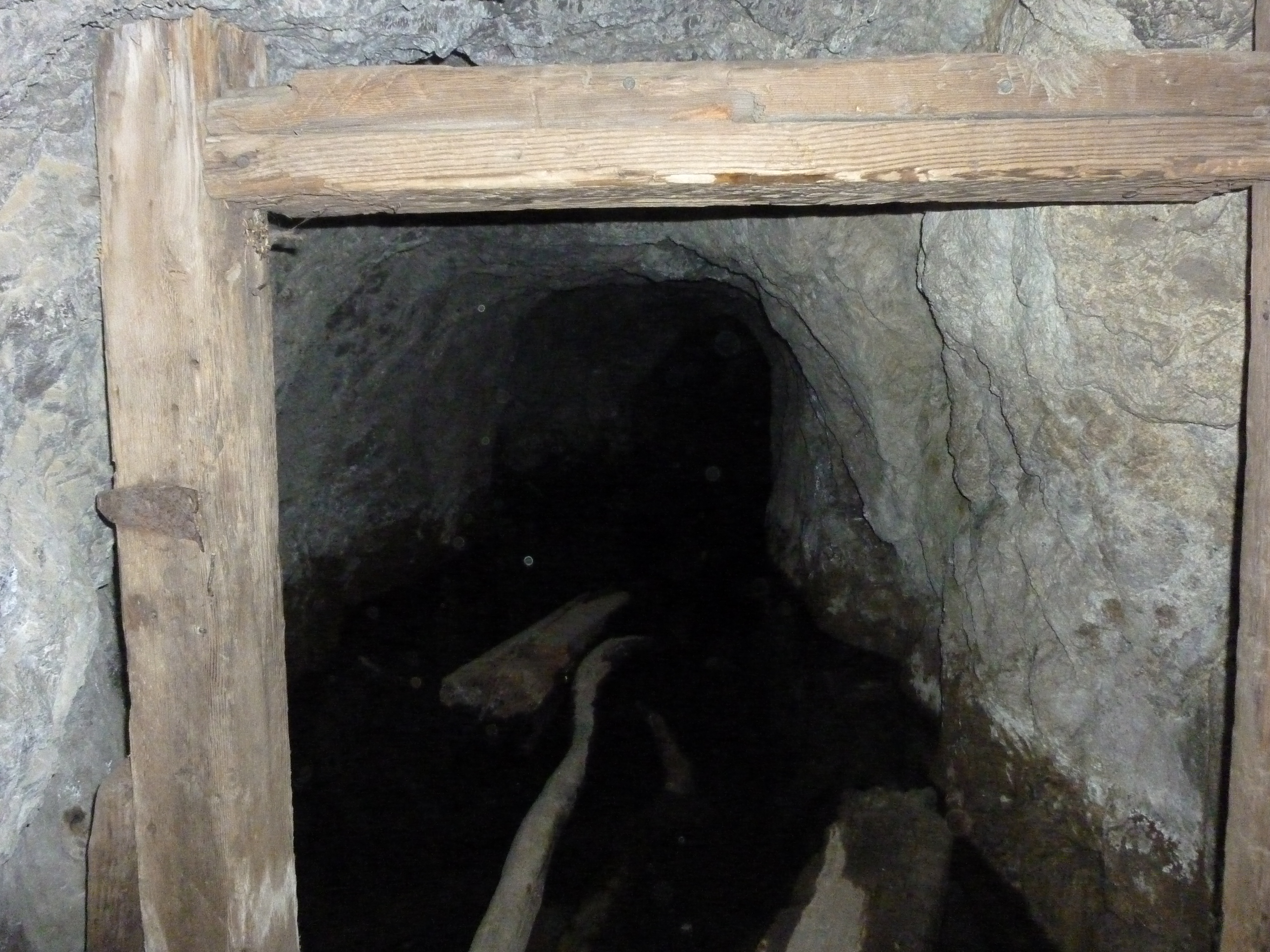
Flooded entrance. Note the hinge on the frame.

As we made our way in, we noticed a lot of wood in the entrance.  I was originally concerned, as it looked like shoring, which would indicate that the miners thought it was unstable.  I breathed a sigh of relief when I looked a little closer and realized that the tops of the posts were not touching anything, and that there were heavily corroded hinges in the frame.  It looked like a gate that had been installed and removed some time ago, according to the LA goldmines website.

It turns out you can make it past the entryway and into the mine proper by carefully walking on the partially submerged wooden beams in entry; the caveat is that they sometimes move, but we were careful and managed to get over them dryly.

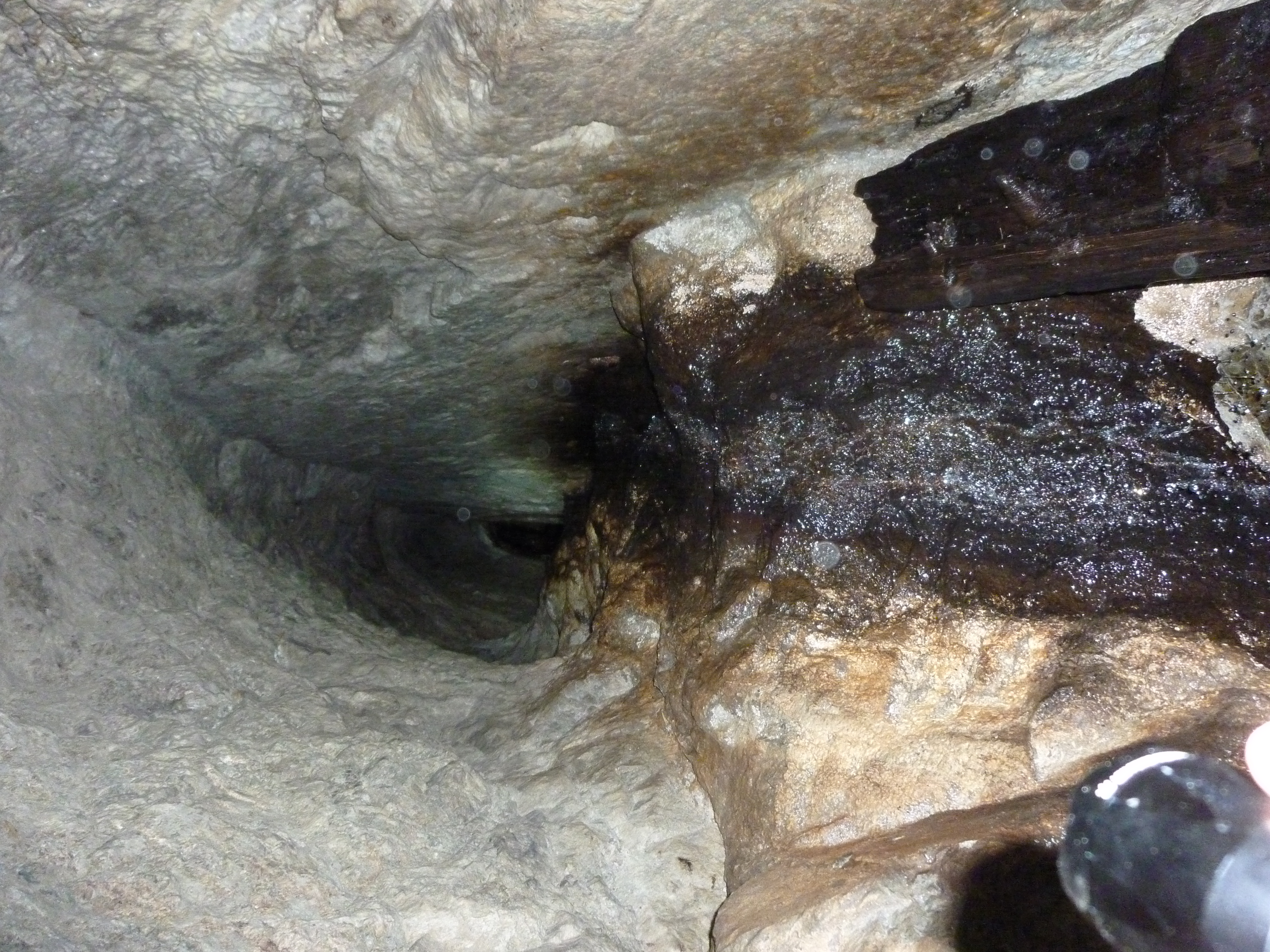
Possible passage to an upper level, from the ceiling of the first level.

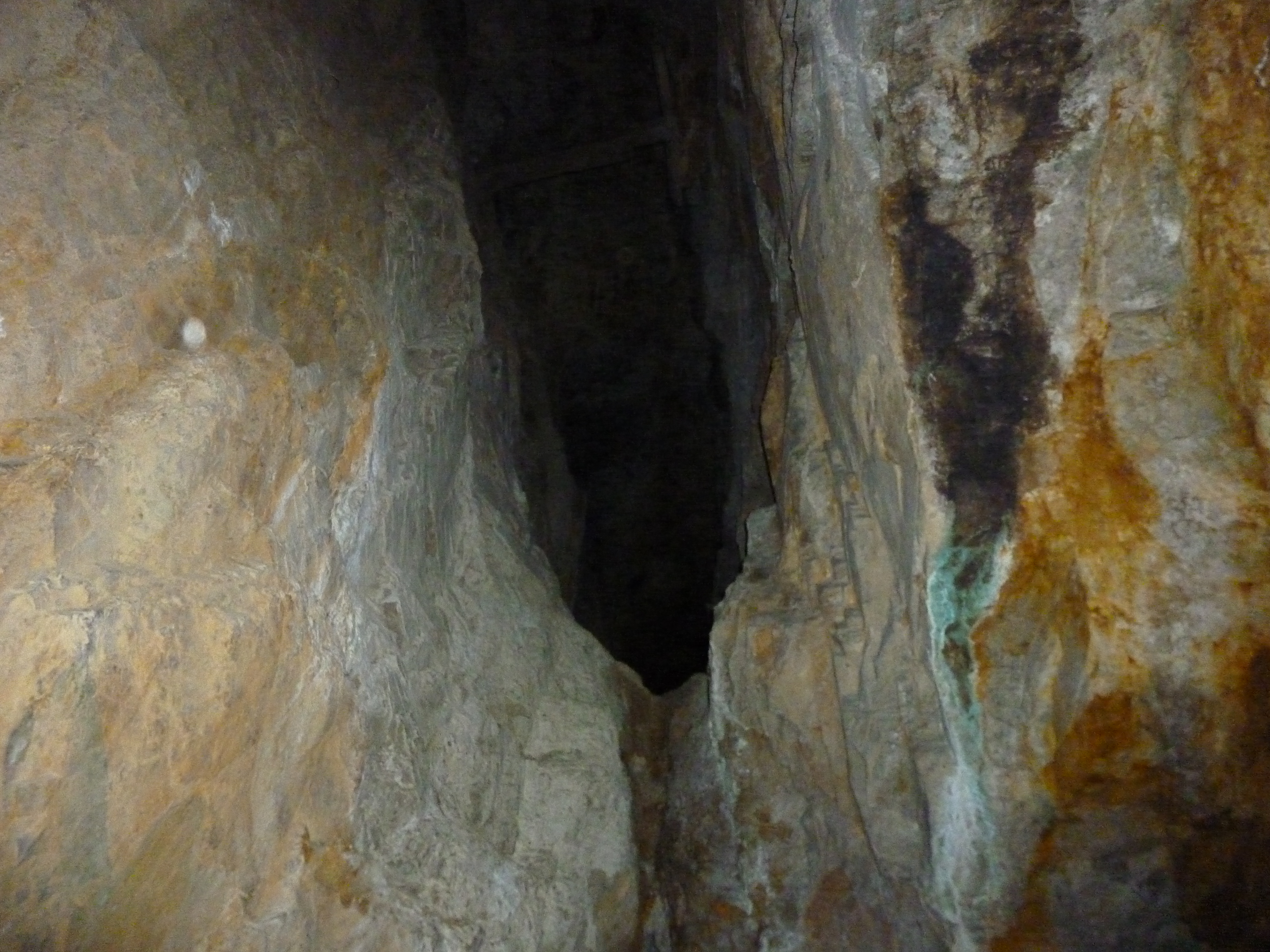
The first floor of the mine today consists of two main tunnels branching out from the vaulted ceiling directly after the entry.  There are stories and maps of an upper level, but we did not have the time or equipment to explore that area, although we did see passages leading upwards.

To the left, there is a long, rather echo-y passage with several alcoves along its length.  By the time we reached the end of the winding passage, we were proceeding at a brisk walk.  It may have been the underground waterfall in the distance, but I felt like I heard a low rumble as we walked along, and that scared me.  After turning around, we observed a short moment of darkness where we all turned off our lights.  This did not last long, as the darkness is terrifying, and Chloe decided it was time for lights again.

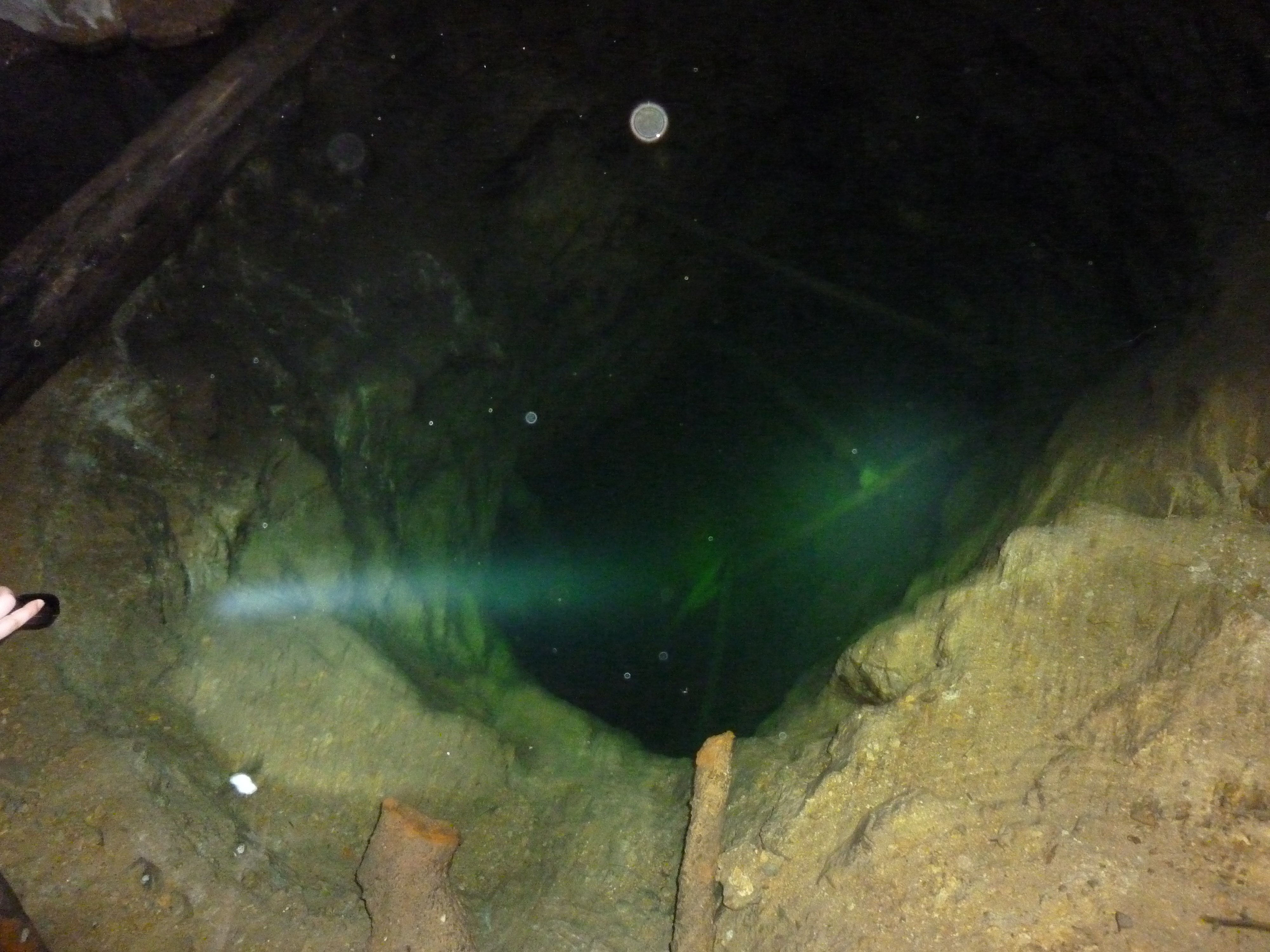
The PIT.

After reaching the main area again, we set out to explore the other passage.  To do this, we had to navigate a thin ledge on the edge of a huge pool of water,  reputed to be 55-80 feet deep.  Scary, and very full of very cold water.  I hypothesize that it was originally another mineshaft, but later they ran into water and it flooded.  Someday, somebody should build an ROV and see what there is to see down there!  Hmm.  Somebody interested in mines, who is an engineer would be perfect for this project!

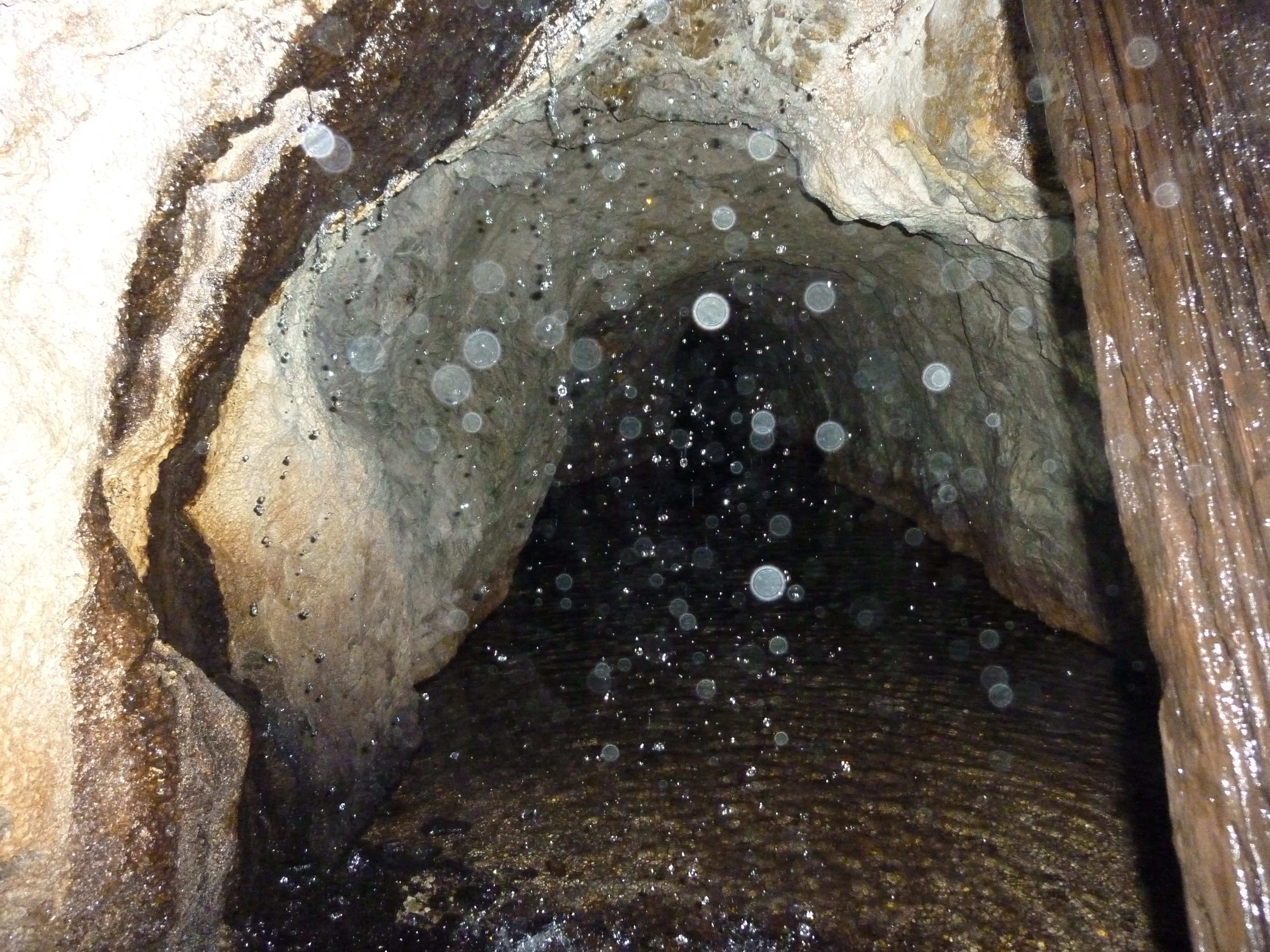
The way is not shut, but it is certainly wet!

The source of the water

After not falling into the water, we were rewarded with a sort walk to one of the most amazing things I have seen; an underground waterall.  It is pretty clear here that there was a dam built to prevent flooding of all the tunnels when somebody started tunneling up, and hit some kind of aquifer or spring.  This flooded the rest of the tunnel ahead and up-stream of the dam, which we decided not to explore because the water was VERY COLD.  Instead, we gawked at the waterfall, and took pictures of ourselves.

Chloe managing to not get wet.

With the obligatory MySpace photos out of the way, we continued to be amazing and not fall into the pit of frigid water.  We crept back to the main room and carefully exfiltrated the mine, again being careful not to get wet.  Once outside, we changed back to our normal shoes, had a swig or two of water, and snacked a bit.  It was really dusk in the canyon now, and we began our retreat with our flashlights on, proceeding at a safe, comfortable pace.  I was somewhat unsettled by the prospect of a night hike, but there were really no other options.

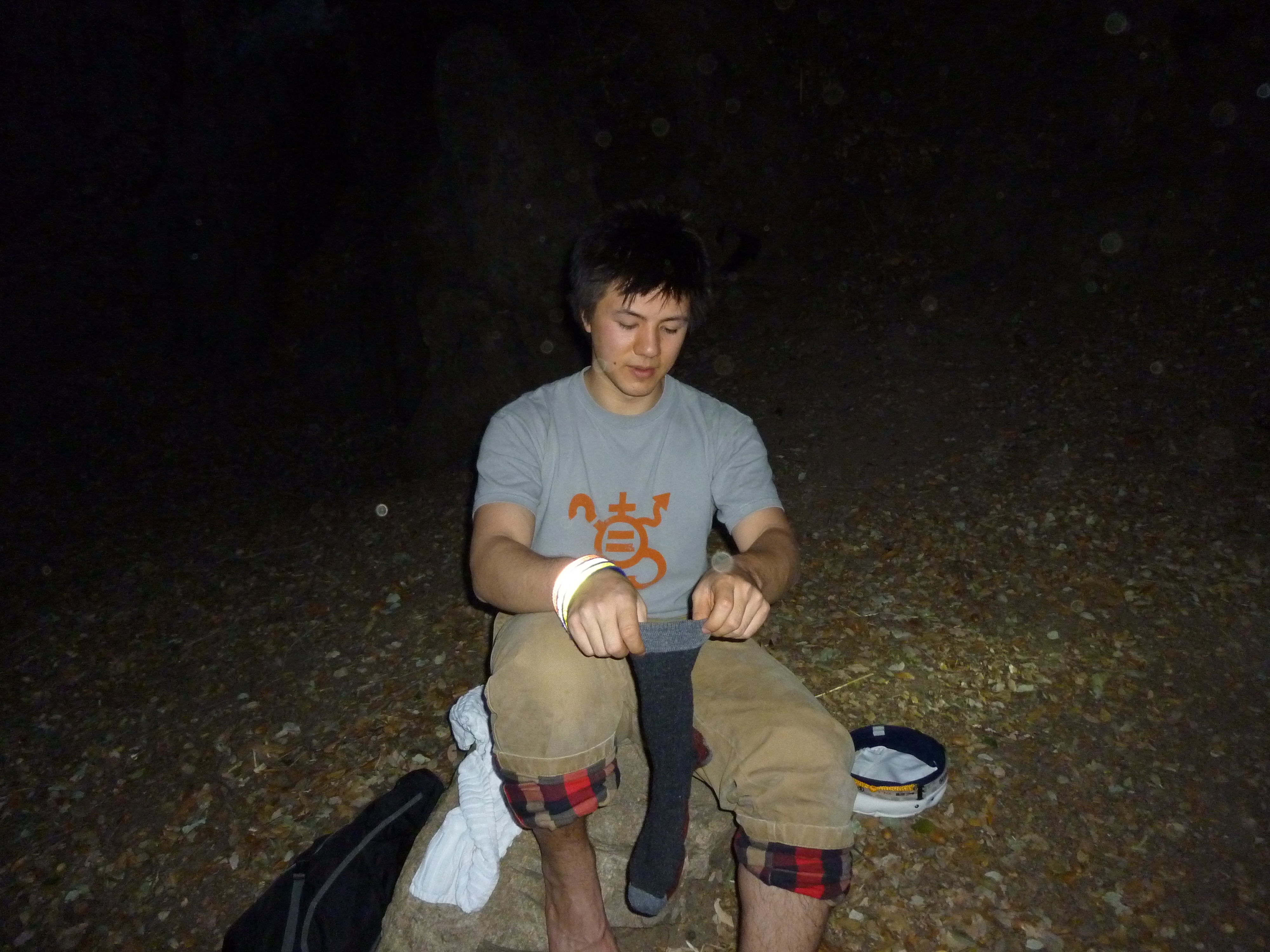
Socks! Socks! Socks!  Smartwool socks are the BEST!

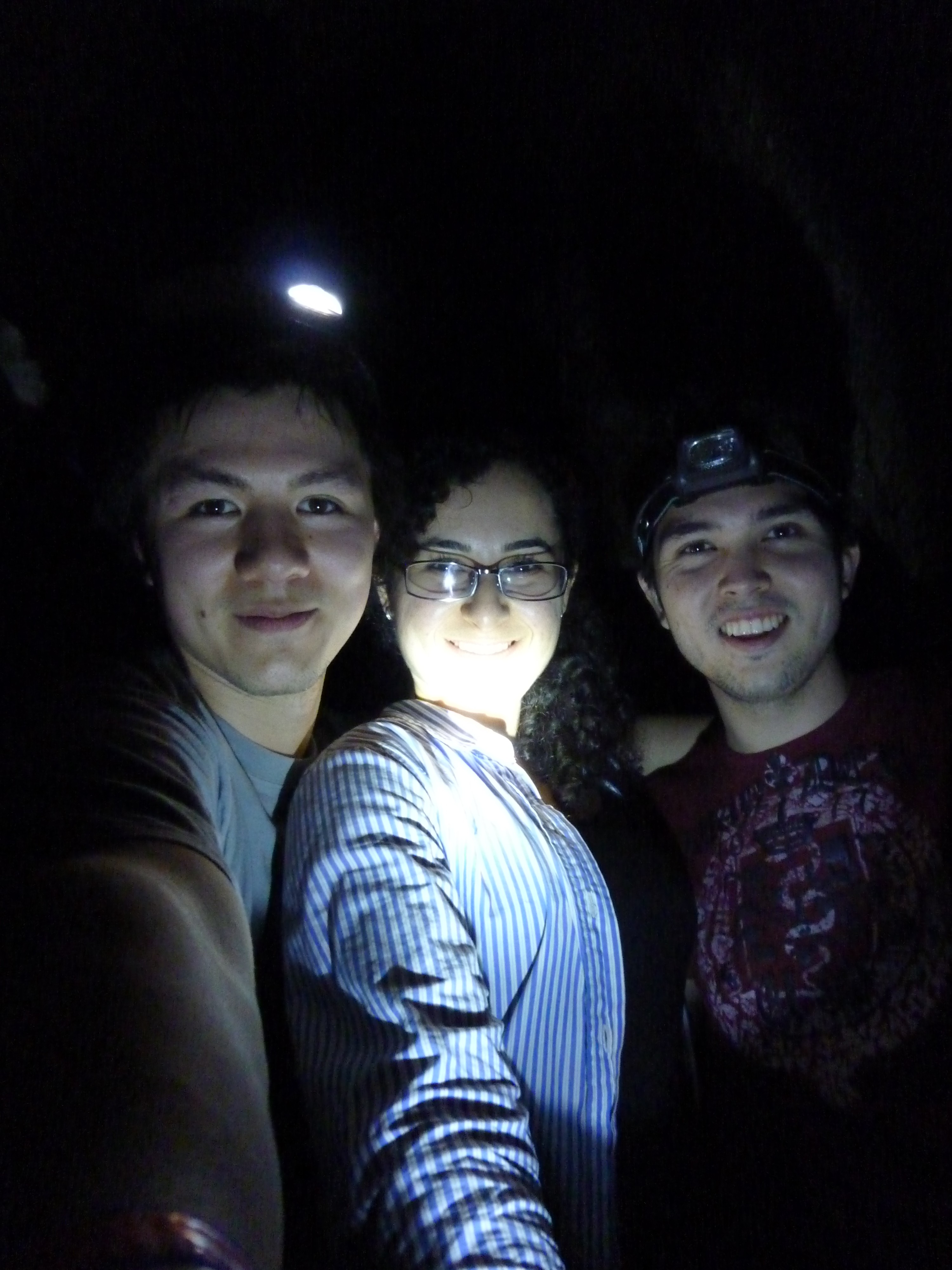
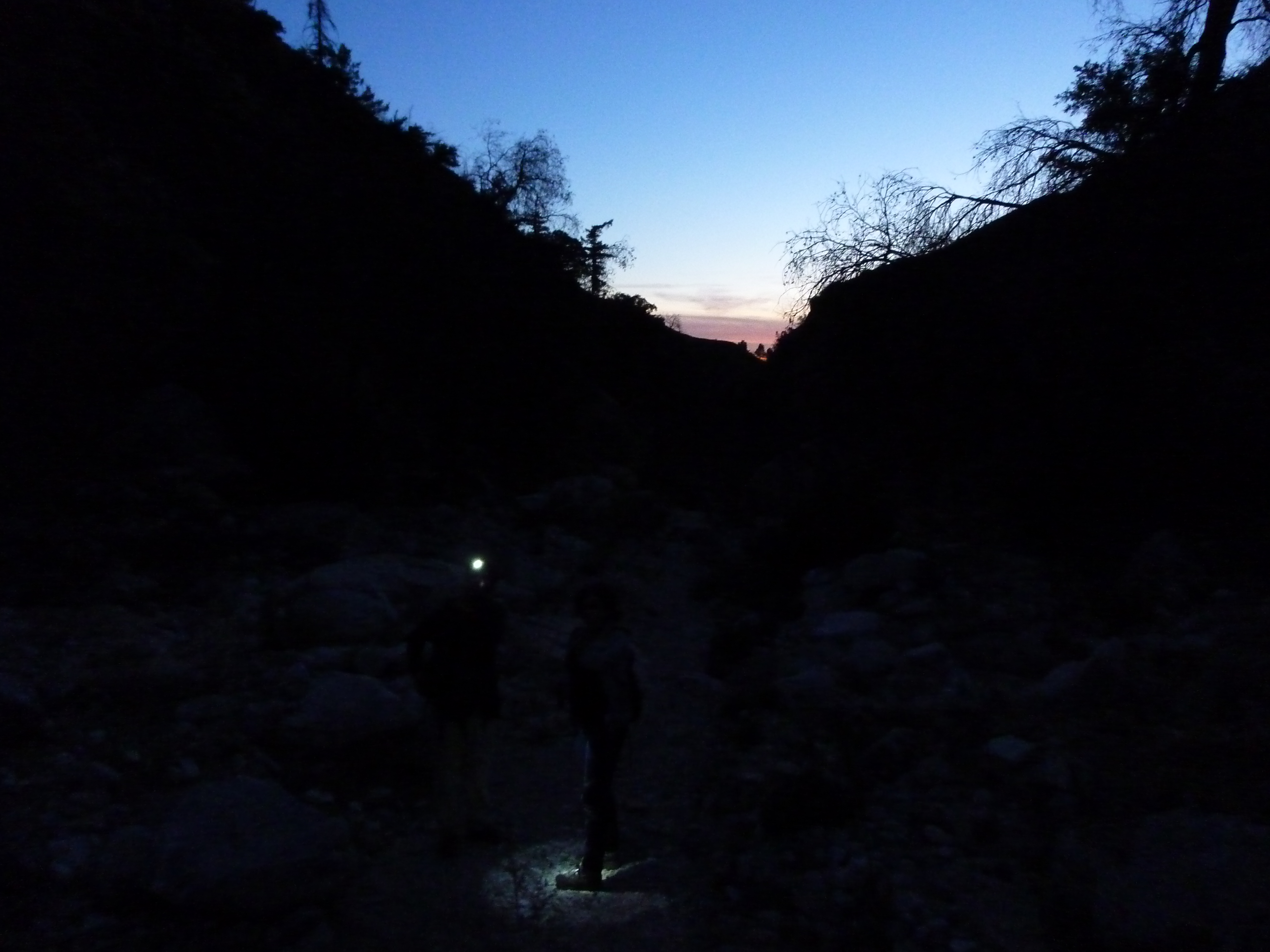
Suddenly, it was very dark.  Here Chloe is illuminated in a small pool of light from her flashlight, and Hardee can be recognized by his headlamp.

The rest of the trip was spent in darkness, with the only illumination being that from our headlights, as the dim glow of the moon did not penetrate well into the bottom of the canyon.  It is amazing how big the canyon felt in the darkness.

Watch out for drops!

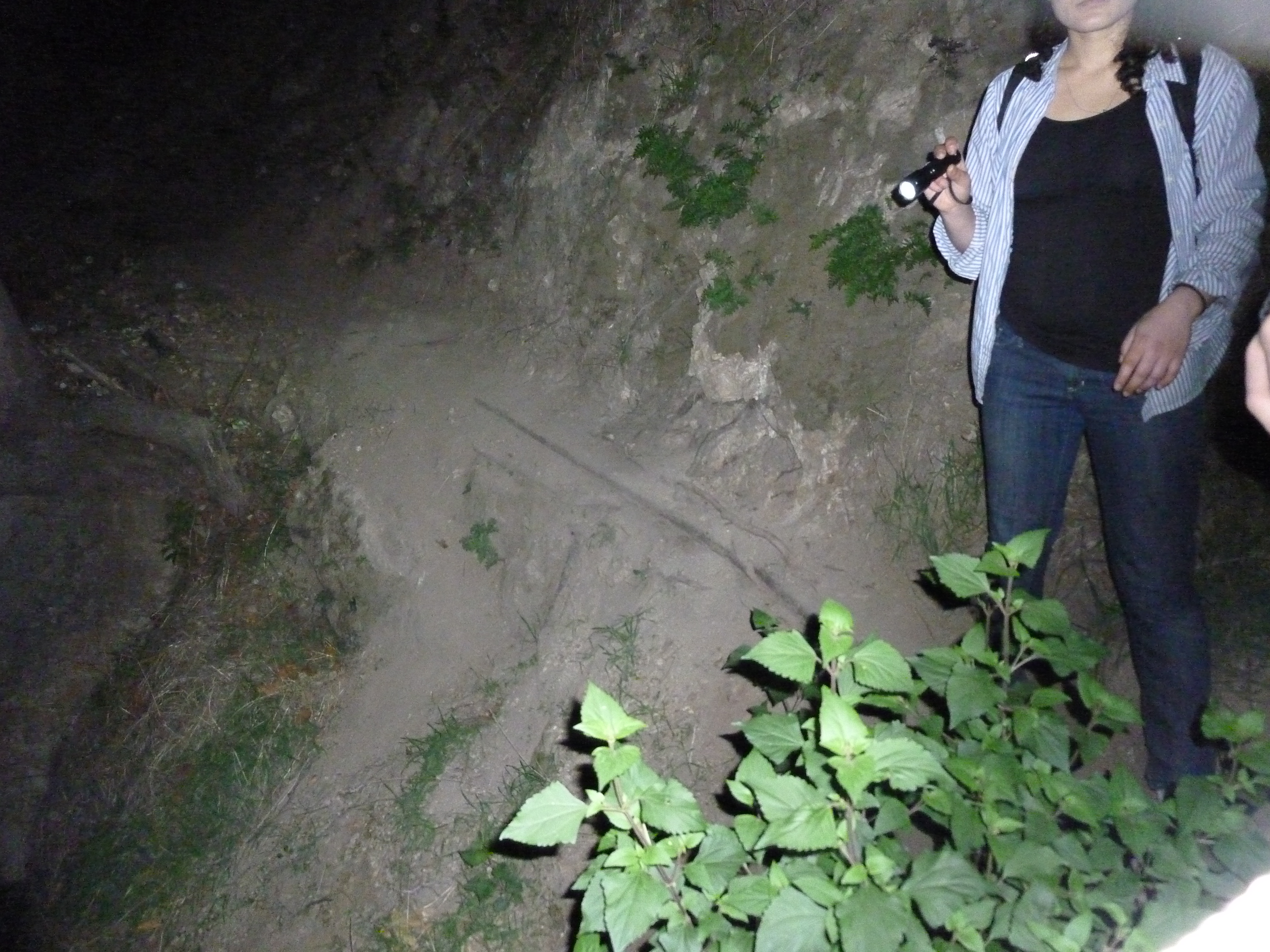
Chloe Points out some especially treacherous parts of the trail.

After many stream crossings, sort climbs down boulders, and a few instances of tripping and almost falling, we arrived back at the fork.  Here we proceeded to climb about 6 feet back up to the riverbank, and headed back to where we had come from.  Upon finding the marked tree and the steep slope next to the cabin, we ascended out of the canyon floor and back onto the trail.  Feeling that we were almost done, we increased our pace, especially when we noticed a pair of glowing eyes on the cliff above us.

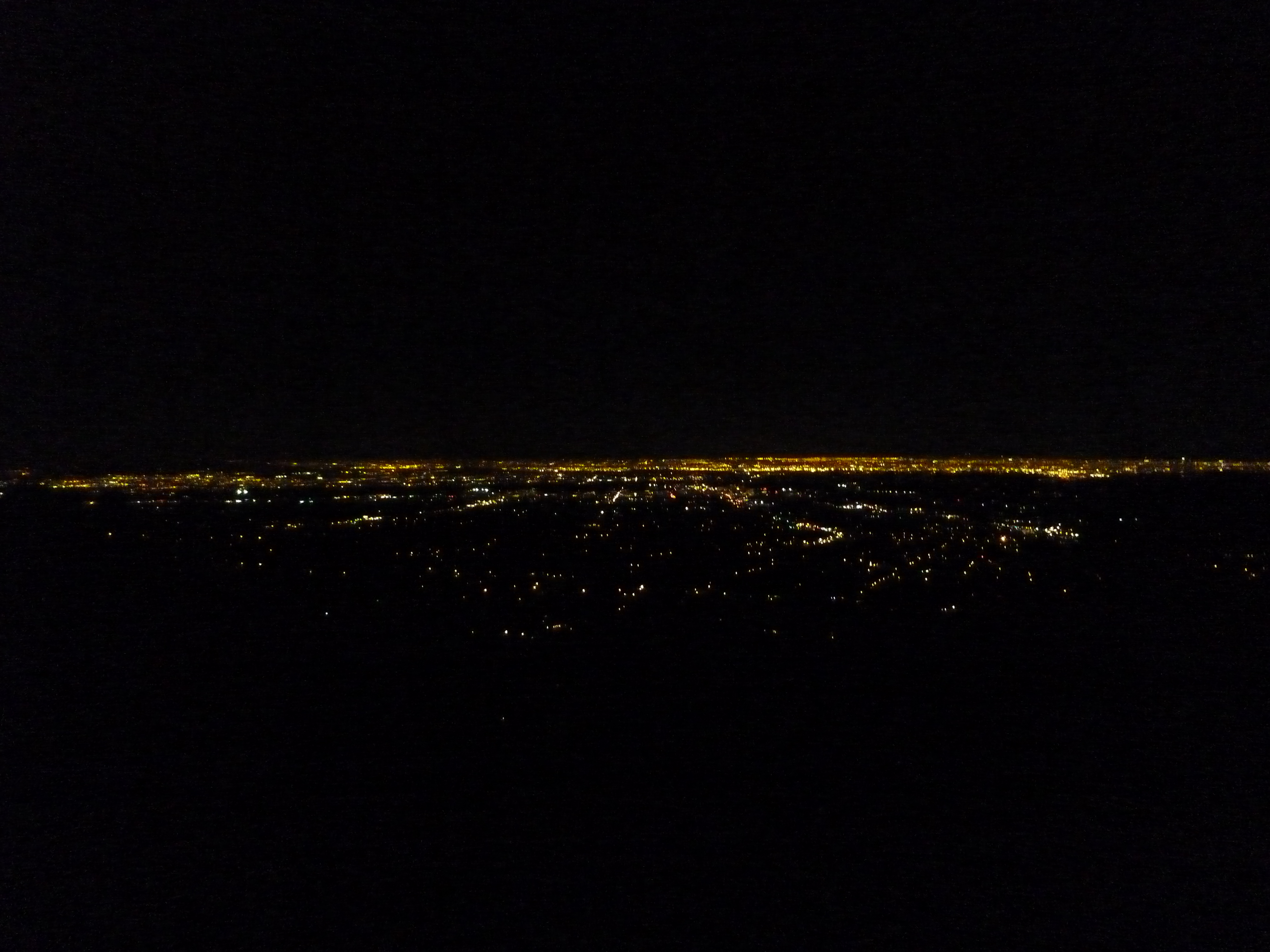
Los Angeles at night.

Just before returning to the car, we cleared the canyon that had been obstructing our view of the glittering lights of the Los Angeles basin.  It was truly a fitting end to the adventure to rise out of the darkness and be reminded that the lights of civilization were still burning strong.  After appreciating this for a moment, we headed in the home-hat direction.
Bioethics: Don’t Ship Invasive Species

A few days ago I naively asked Gulf Coast Ecosystems if they would ship me some Bryopsis cultures.  They noted that they do not normally stock it because it is highly invasive.  At first I thought they meant that it was highly invasive in fishtanks, but then it dawned on me that they meant that it was highly invasive to local waterways.  I certainly do not want to be responsible for messing up the local ecosystem, but I may have inadvertently done that had I not been informed by a responsible seller.  +1 Gulf Coast Ecosystems, +1.

5 Gallon Saltwater Tank Build

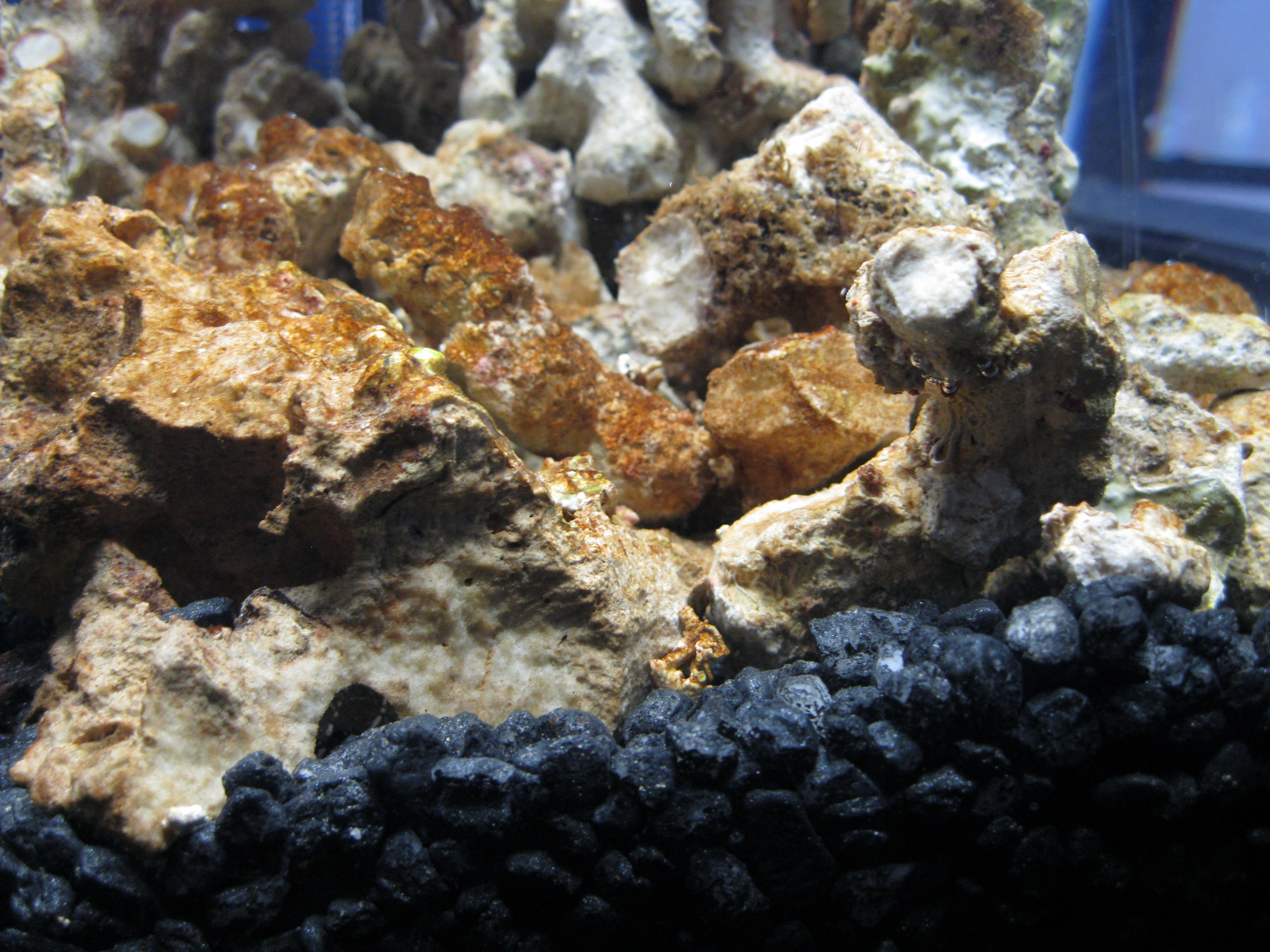
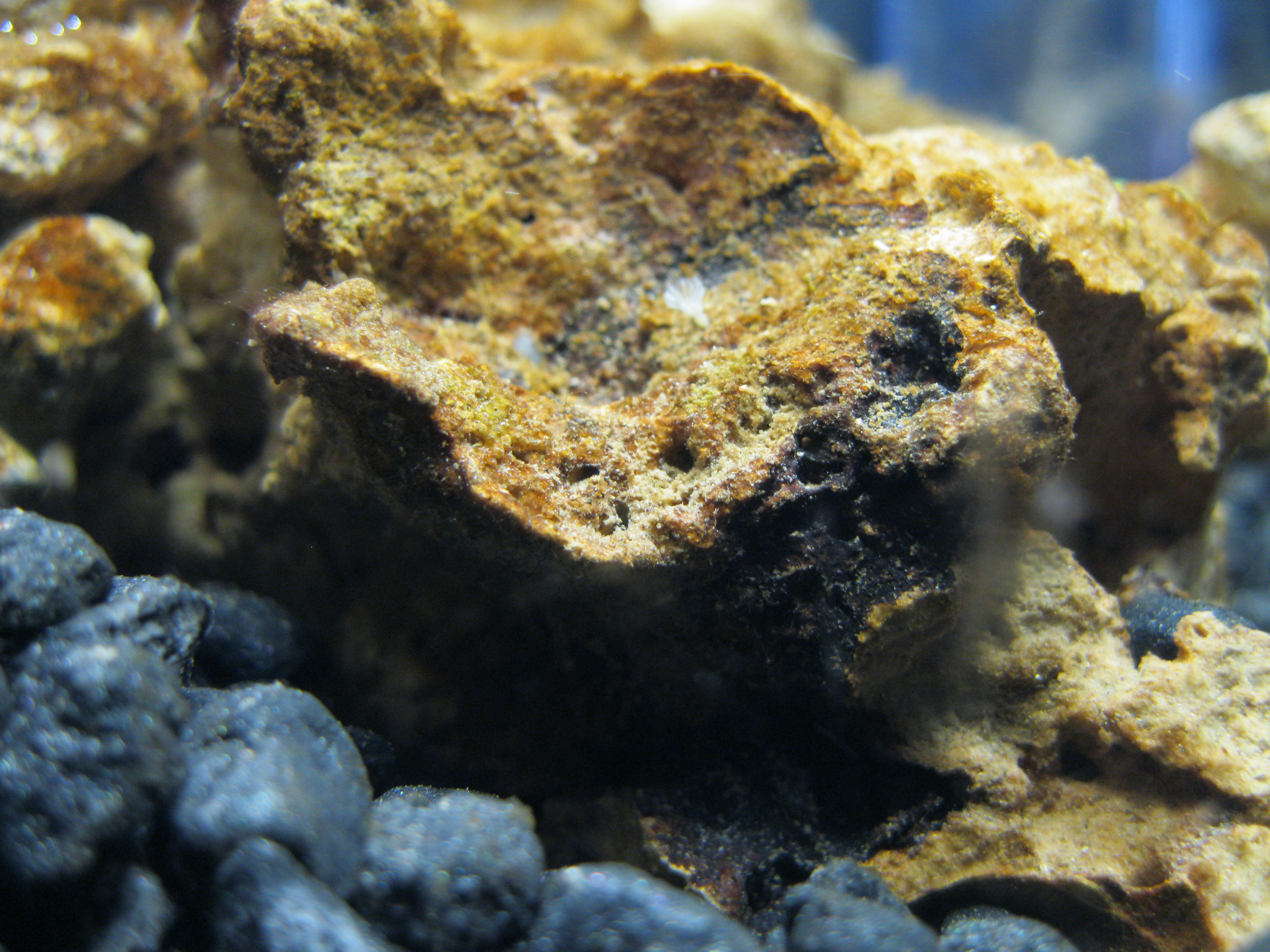
Magical live rock

I have finally branched out from molecular biology and microbiology in DIY bio.  A number of factors have led me to start a 5G saltwater tank.  The driving force behind this project is an interest in growing aptaisia anemones as an awesome pet.

RIP Magnum, the best fish

The tank itself is a marineland eclipse hexagonal 5G tank.  It was purchased originally to house a betta fish, which later perished (not under my watch).  The tank was donated to the cause of a cool saltwater system some months after that occurred, and needed to be scrubbed.  After removing some mystery goo from the inside, washing crud and freshwater plants out of the gravel, I filled the tank with water and added some water conditioner to remove chloramines and other nasty chemicals,  I set off with my partner in crime/girlfriend to go get some sea-salts, live rock, and a hydrometer.

We ended up in a specialty reef and tropical saltwater shop out on the 9 in Natick, called Tropic Isle Aquarium.  I wish I had pictures of the front of the shop; it looks tiny, cramped, and somewhat sketchy (especially at night).  The outward appearance of the store was pleasantly deceiving!  The inside was well lit, teeming with livestock, packed with good stuff like live rock/sand, and staffed by some very friendly people.  It was very well maintained; we saw one dead fish in the entire store, which had aisle upon aisle of floor-to-ceiling tanks, while at petco we normally see 5-10 rotting and dead fish in maybe one aisle of tanks.  This place was awesome, and I ended up buying 2.5 lbs of cured live rock (WAY too much), a deep-six hydrometer, and a bag of instant ocean that should last for a few months.

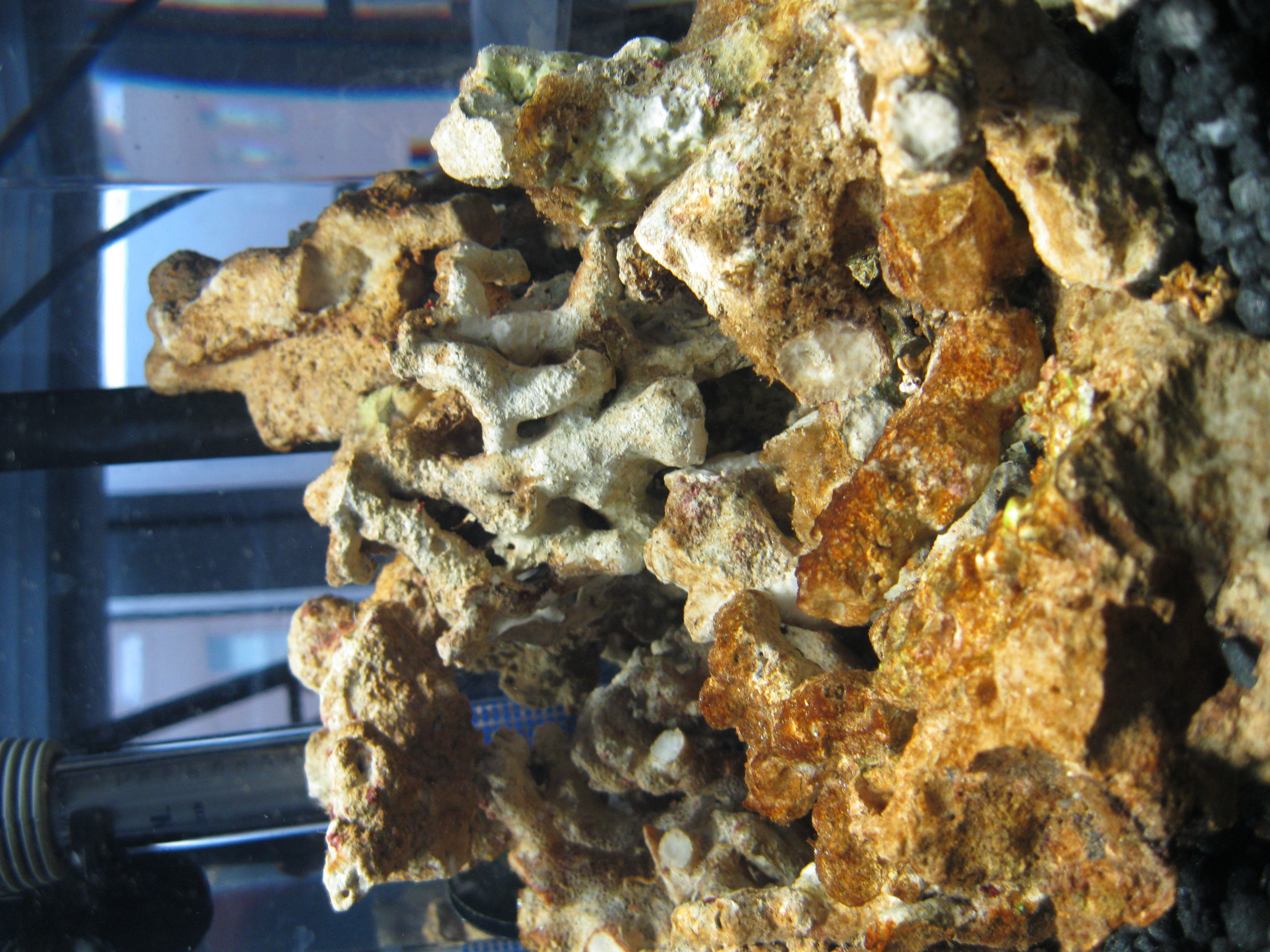
The rock in the tank!

Upon the return to the tank, I bravely rolled up my sleeves, got out some measuring cups, and started adding instant ocean (as directed, 1/2 cup per gal).  It turns out that instant ocean is not quite instant.  It does take a little bit of time to dissolve, and it is definitely something you want to add gradually, so as not to accidentally bump salinity up too high.  I would definitely recommend that you get a 5 gallon bucket from your local hardware store to mix the water in.  Once my aquarium was properly salted, I checked the salinity with my sweet new hydrometer.  It was between 1.023-1.024, so it seemed safe.  It was weird to think at this point that the tank was a saltwater tank.  Never thought I would have one of those in my room.

The next step was to add the live rock.  I opted to cover up the heater and the filter intake with rock, to prevent larger organisms (that will hopefully come later) from getting sucked up.  After some arranging, I reinstalled all the cover pieces, and turned on the light.  And then I waited, straining my eyes to see if anything was alive on the rocks.

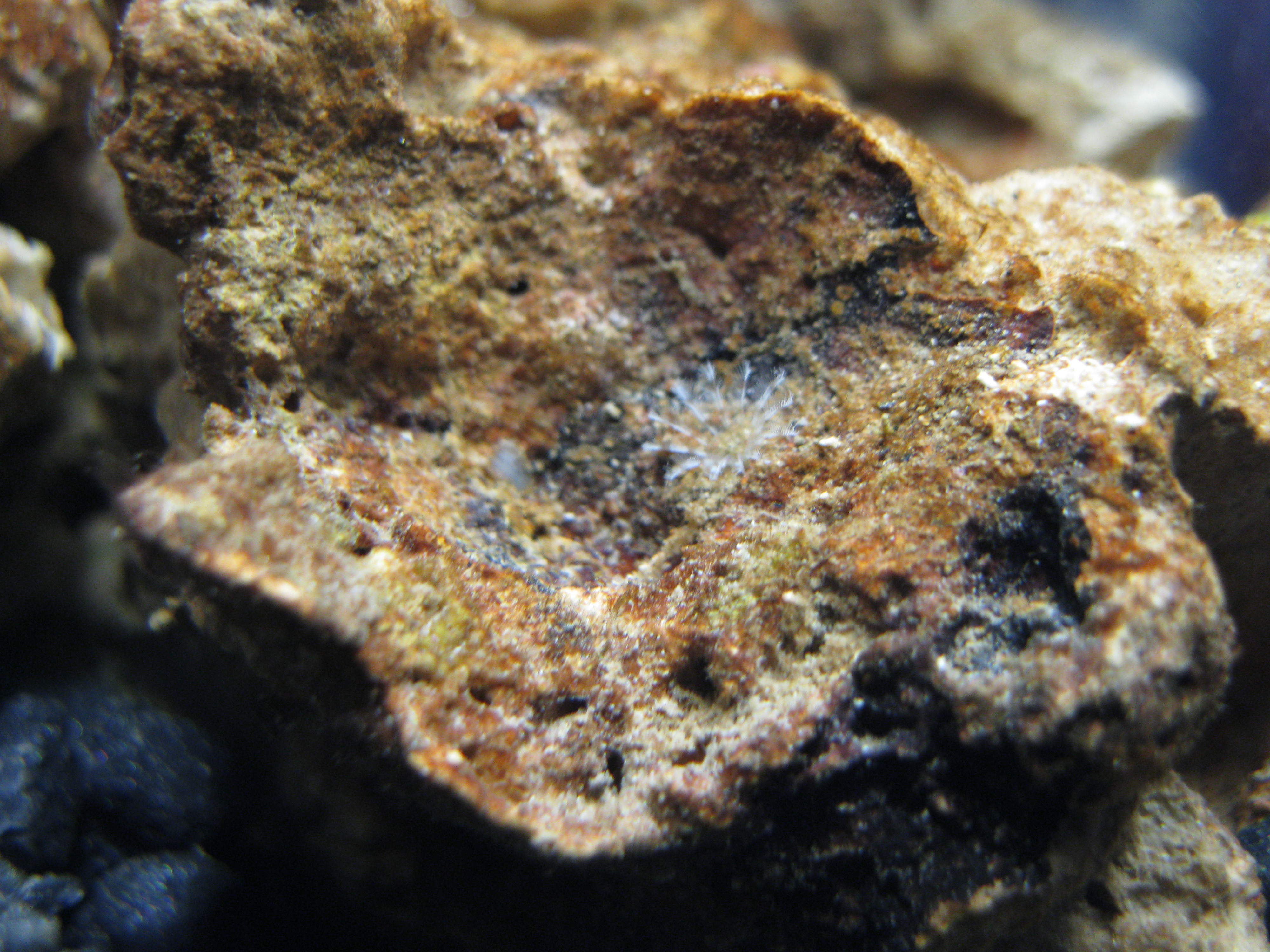
And then the magic started to happen.

Featherduster polyp, partially expanded.

After some carefuly scrutiny of the rocks, I discovered what I believe to be a featherduster (anemone?).  It quickly retracted back into the rock when I turned on the light, but after careful observation, I saw it slowly swell out of the rock and open its feathery appendages.

A few days later we found two small polyps on a rock, another featherduster, and TONS of “pods” or small invertebrates, and a teeny snail.  The tank seems stable, and hopefully I will be able to add some tough critters in the coming month.  Until then, I will enjoy watching the feather dusters grow.

Featherduster polyp, fully expanded.

Secret Knowledge: REVObots

Recently, the leadershio of the REVO (Research on Electric Vehicles at Olin) club approached me and asked me to drop some secret knowledge on them.  While they have had some experience with EVs, they have no real EE background, and a very limited embedded/microcontroler background, and they wanted me to fix it.

Over the next few days I developed a 6-class course that would get their feet wet in the direction of building and understanding useful devices on an EV, or really any platform using a microcontroller, and even some that don’t (motor drivers and such).  I will be using the arduino platform for what it was intended; as a simple teaching platform.  The six classes are based around these learning goals:

  1. Explain what a mcu is, what it is good for, and what kind of hardware capabilities they have as far as PWM, ADC, timers and counters.  Explain what an arduino is, and build the secret knowledge arduino.
  2. Explain basic sensors that depend on resistance (thermistor, photoresistor) and current (photodiode) work.  Explain digital sensors, show an example with the 1-wire protocol.
  3. Explain various control schemes: on/off, proportional, differential, and integral.  Explain how to actually use them in hardware, using examples like the laser poejector.  Focus on quadrature encoding.
  4. Explain how to control big things like motors or AC current, with little things, like microcontrolers.  This will be all about BJT transistors, H-bridges, and relays.
  5. Explain how to talk to other devices via serial and USB.  This will be pretty theory-heavy, but we will have a USB example.
  6. Putting this all together, we will finish building a small robot and have it do some kind of task.

These six classes will be spread out over six weeks, and each will have both a lecture and a lab portion with a deliverable.  This is similar in structure to the other Secret Knowledge projects, but it differers in a few ways that will hopefully help deal with the problems of students not coming to classes, and students not retaining knowledge.

The difference here is that class is predictable.  Each week of TSK before was planned on the fly, materials were sourced from a withering stockroom, and everything had to be dirt cheap.  This made it hard to say what we would be doing from week to week.  The predictability makes it easy to know when to be where.  There is also a big carrot dangling at the end of six weeks when the students actually finish the robot; this will hopefully help eliminate the week-to-week variation of interest.

To help with the knowledge retrieval after the class is through, I will be putting together a guide ahead of time, with stuff people will learn each week.  Ideally, each deliverable will also be structured as a working example of the concepts covered in the class, and seeing everything work together will help cement the knowledge.  Most of the material will just be me throwing mud on a wall and hoping some sticks; the idea is that people will at least know where to start projects with mcus once this is all said and done.

I will be blogging more about this here as the class begins and things are done.  Classes will be recorded and posted on youtube.  In the Secret Knowledge tradition of flying-by-the-seat-of-ones-pants, and living on the gritty edge of barely being on time, right now I have a two week lead time before the class starts.  Better get going!

Making a Knife From a File: The Blade

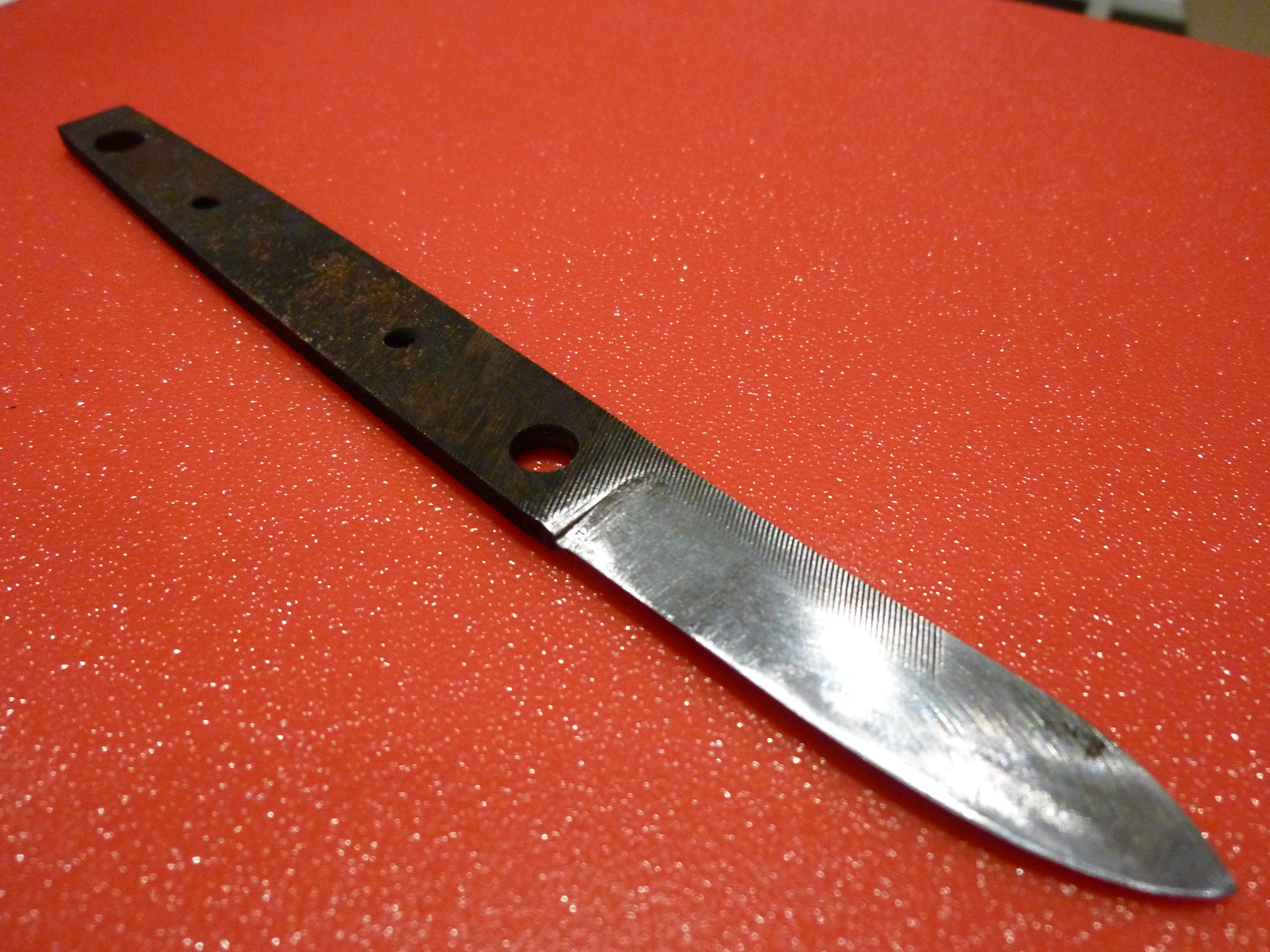
The nearly-done blade

I decided that I was going to make myself a knife from a file.  There are many guides on the Internet that tell you how to do this, but this one will be mine.  This part of the guide is going to explain the process that I used to design and make the blade from start to finish in great detail, unlike the other guides that are out there that say something vague like “quench” and “heat treat at 425”.

The first thing you should do is decide what you are going to do with your knife, and exactly how it is going to look.  I only did the first bit, and sorely regretted it later.  Since you are going to make the knife from a file, I would suggest going out and buying one.  I used a 6″ Nicholson bastard file, which was about $5 at OSH.  I based on what I have read on the web and knife making forums, Nicholson files are W1 (W-1?) steel, which is water or brine hardening.  Beware the dollar store file!  Some of them are not high carbon steel, but low carbon steel that has been case hardened.  You wouldn’t want to waste days of work just to have a soft knife, would you?

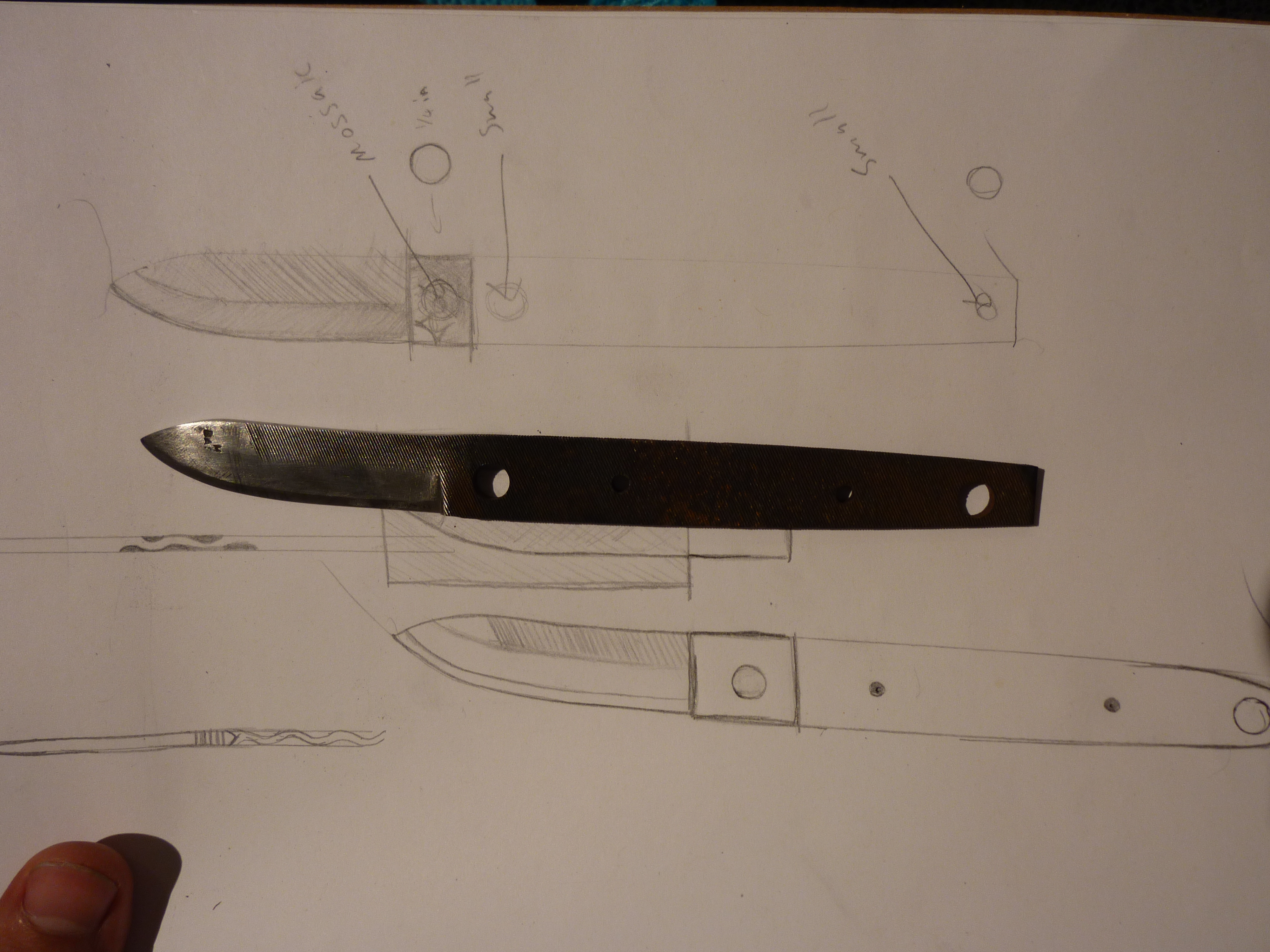
I liked this design I liked the best.  You can see the outline of the tang of the file on the right.

Trace the file out on a piece of paper.  Hold the file in your hand and figure out how big of a handle you want.  Decide if you want a depression for your index finger or thumb.  Think about the work the blade will be doing, and how long you have to finish the blade, and what your skill level is with the medium.  I have a lot of experience filing things, but none with forging or heat treating, so I went with a thick, durable blade, with a slightly finer edge for slicing, scalpel-style.  It should be good for cutting up fruit and opening boxes, which is what I normally use my (current) knife for.  I also wanted to try to use some mosaic pins, and this got me in trouble because I did not take them into account in my design.

Straight air-coolin’

Once you settle on a design, you will need to anneal the file before you can start to remove the material.  Remember, you never want to rub your files on each other because they will get dull.  This is because the metal is incredibly hard.  Annealing softens the metal so that you can grind/file it off more easily.  The way to anneal steel is to heat it up and let it cool VERY SLOWLY.  How hot it gets and how long you it cool play into how soft it gets.  I heated mine up to a dull red hot and let it cool in air, and it was soft enough for me to work with.  You can also just leave it in your forge and let it forge-cool, but you will have to wait until long after all your charcoal goes out before you can touch it.

The knife after some rough grinding

Here I have used the grinder to do some stock removal.  It is best to keep the steel cool during this process by dipping it in water.  As you can see, the blade got very hot during this grinding process, causing some tempering colors to begin to appear on the blade.  It got so hot that some parts hardened when I dipped it in water to cool it off!  I used a butane torch to heat it up and anneal it again once I started to file.  You can tell the bevel is very uneven right now, because there are several facets that have light reflecting off of them.  This can be a good way to file straight; just file until the whole blade is reflecting light at the same time, or not.  While filing, you should be able to see the color of light and the finish of that particular facet spread across the blade.

Ink test

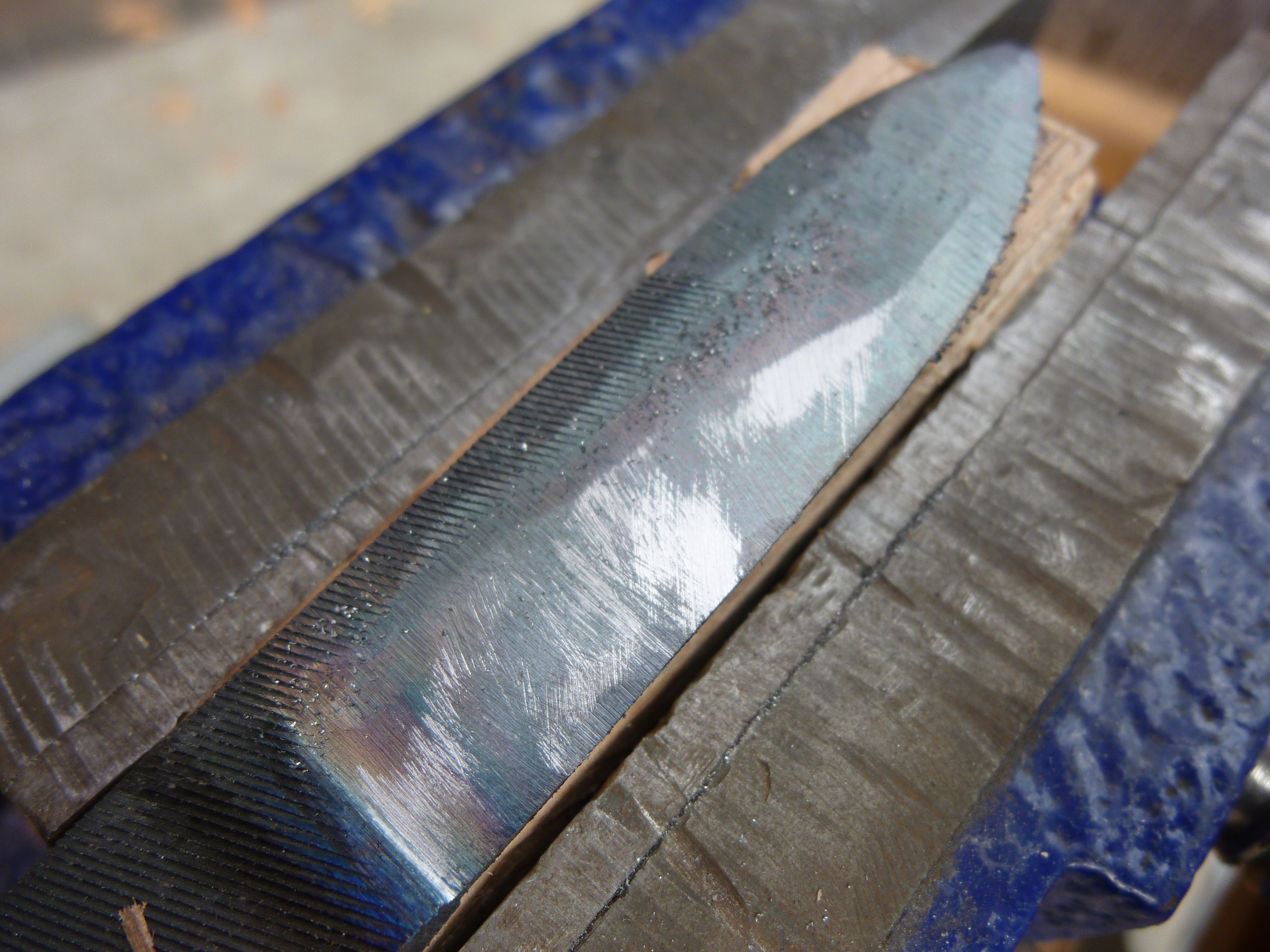
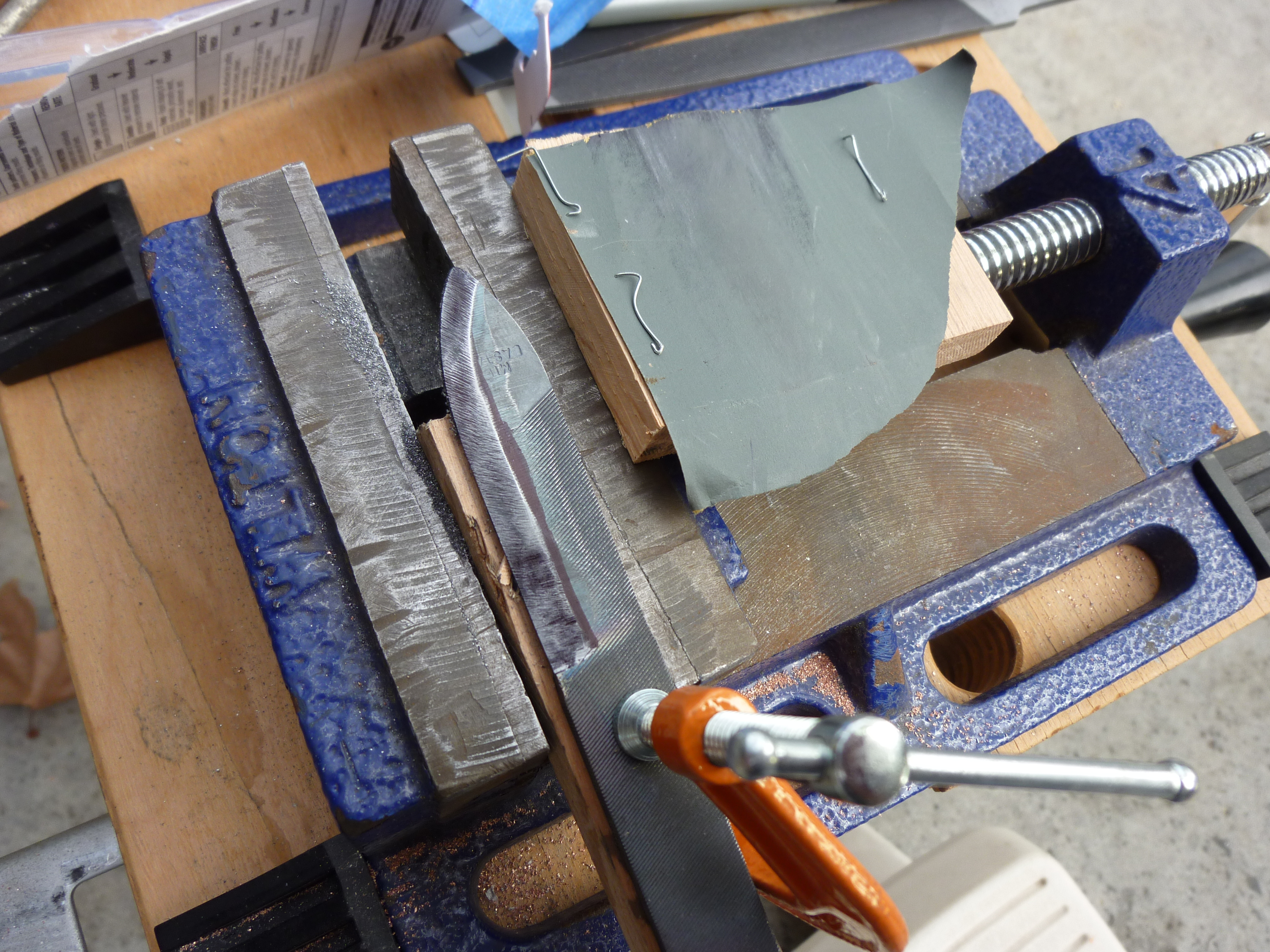
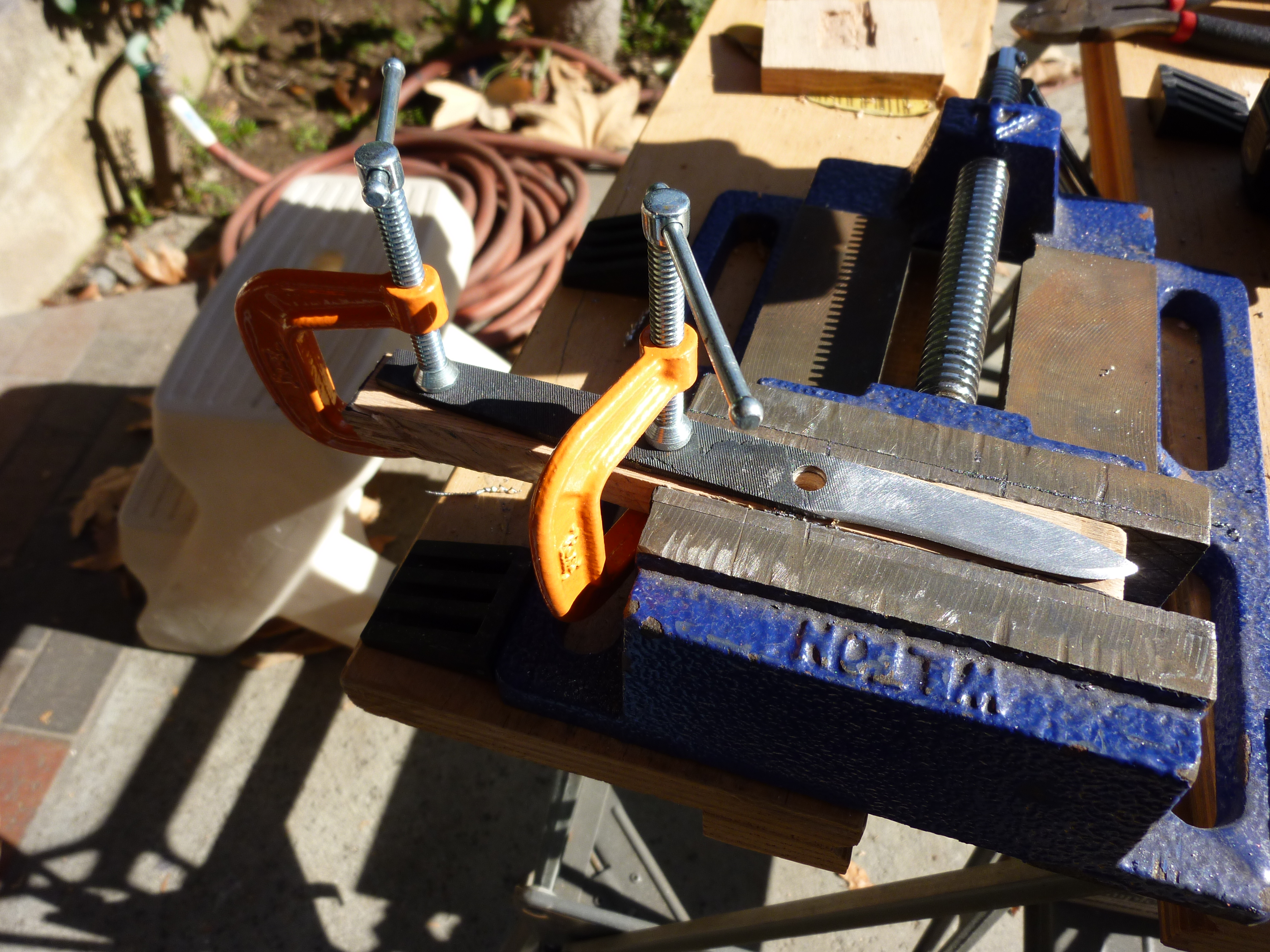
Here is another shot of the filing process.  It is best to keep your knife locked down so you can file the bevels flat.  Here I have C-clamped the knife to a piece of wood, and put the wood in the vice, making it very easy to file the knife without it moving.  You can also see a sharpie line I drew on the annealed blank- this is so I do not remove material past the line, in order to create the correct shape of bevel.  The sharpie that is on the blade is to check for high spots.  I color the whole thing in, and then take a piece of sandpaper stapled to a piece of flat wood, and push it over the blade.  High spots (relative to their surroundings) end up polished, and low spots end up still covered in ink.  You can see this effect in the scratches on the blade, and the edge where the bevel begins, which is relatively higher than the neighboring portions of the blade.  I wanted a thick blade, because I want this knife to be tough.  I was going to have only one bevel on one side, and two on the other so that it would be easy to sharpen for me, as a righty.  This was a mistake, as it turns out, because the single-bevel side always gets scratched by the sharpening stone.  Oh well, you live and you learn.

Setup for drilling holes in the knife mentioned in the over-melted post.

This is also a great time to drill holes for your bolster and handle pins!  I drilled 1/4″ holes  with a hand-held drill.  Hopefully I did them straight-ish.  A drill press is really handy here, but I don’t have one at home.

Heating up to critical

The next step is to normalize the steel.  You do this by heating the blade to non-magnetic and then letting it air cool.  If we had been beating on it with a hammer, this would help reduce the stress in the blade.  Since I didn’t actually beat on it to form the blade, I am hoping this takes care of any stress caused by heating during grinding or drilling.  It does not take too long, and it seems like a good precaution.  Some people normalize up to three times, but I thought two cycles would be just fine given that I did not pound on the blade.
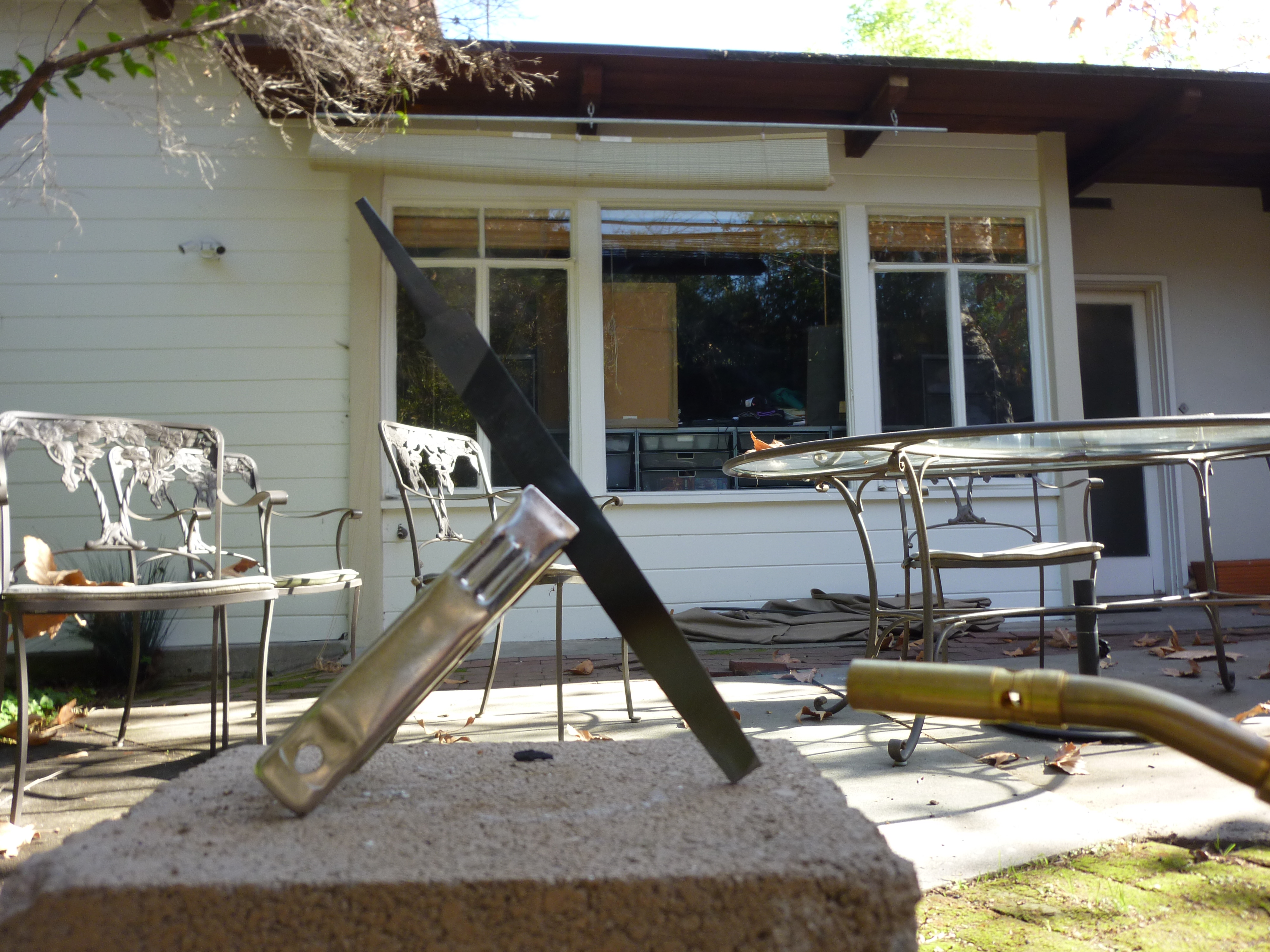
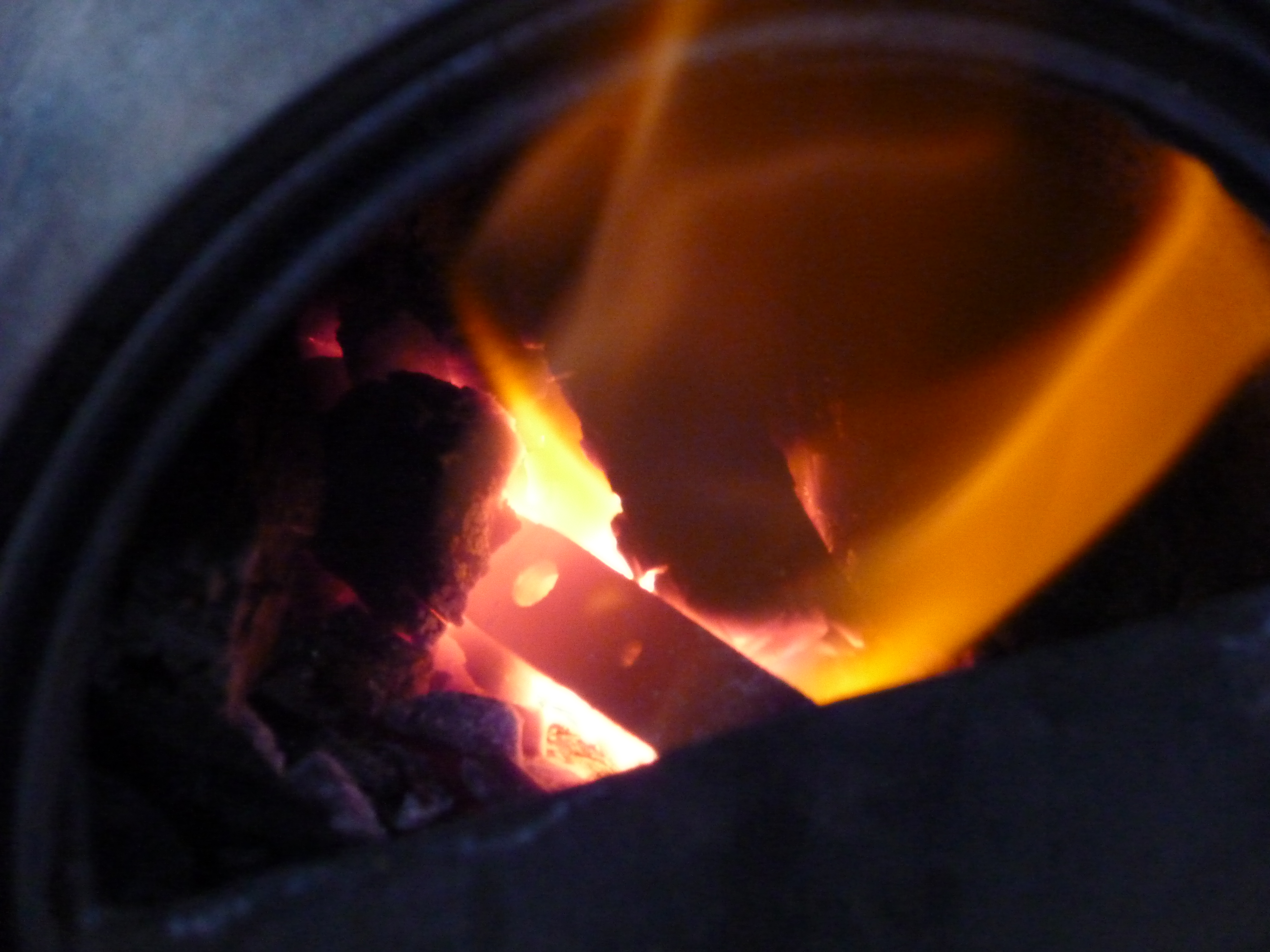
The next step is to harden, and then temper the blade.  This process is collectively called heat treating.  There is a lot of conflicting information about how to do it properly.  The most consistent message I found was to quench in brine, water, or oil, and then stick it in the oven at somewhere between 425-475 F for about an hour, depending on how hard you want your blade to be in the end.

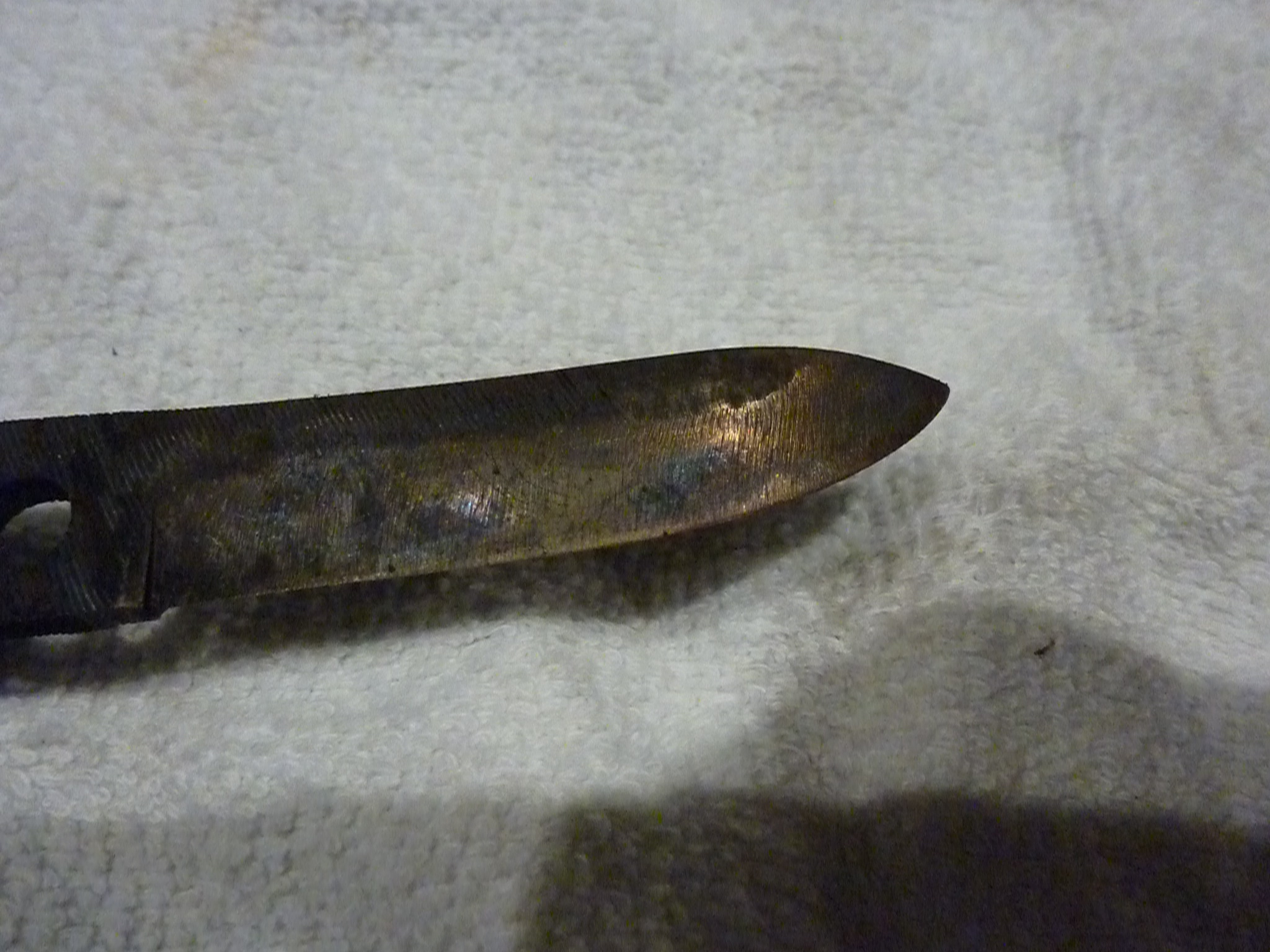
This leaves a lot to be desired.  I found a lot of believable information about the process here, but their process is very specific and it was hard for me to estimate what temperature my blade was.  The process I used was to heat to non-magnetic, quench in brine (recipe: add salt to water until it will not dissolve anymore) using a slicing motion and then polish a small portion of the now forge-scaled and tempered blade.  This was done to make the temper colors visible when I stuck it in the oven at 450 F.  I waited until the edge of the blade to turn a “light straw” color, and pulled it out and let it air cool.  Mine might have been a little dark, but better over-baked than over-melted!

It is starting to look like the knife I designed!

After a little sanding, The blade was looking much better.  It is super effective against fruits, vegetables, and paper, and it even looked a little bit like the knife I planned on making.  After some more polishing, It will receive an nice handle and a bolster of undetermined material, and a couple mosaic pins.